
Oct 12, 2026 · by BalayHub Admin · 6 min read
RFO Condo vs Pre-Selling in the Philippines: Which to Buy
RFO condo vs pre-selling: cash needed now or stretched over 24 to 48 months, construction risk, rent from month one, and the finished buildings by city.
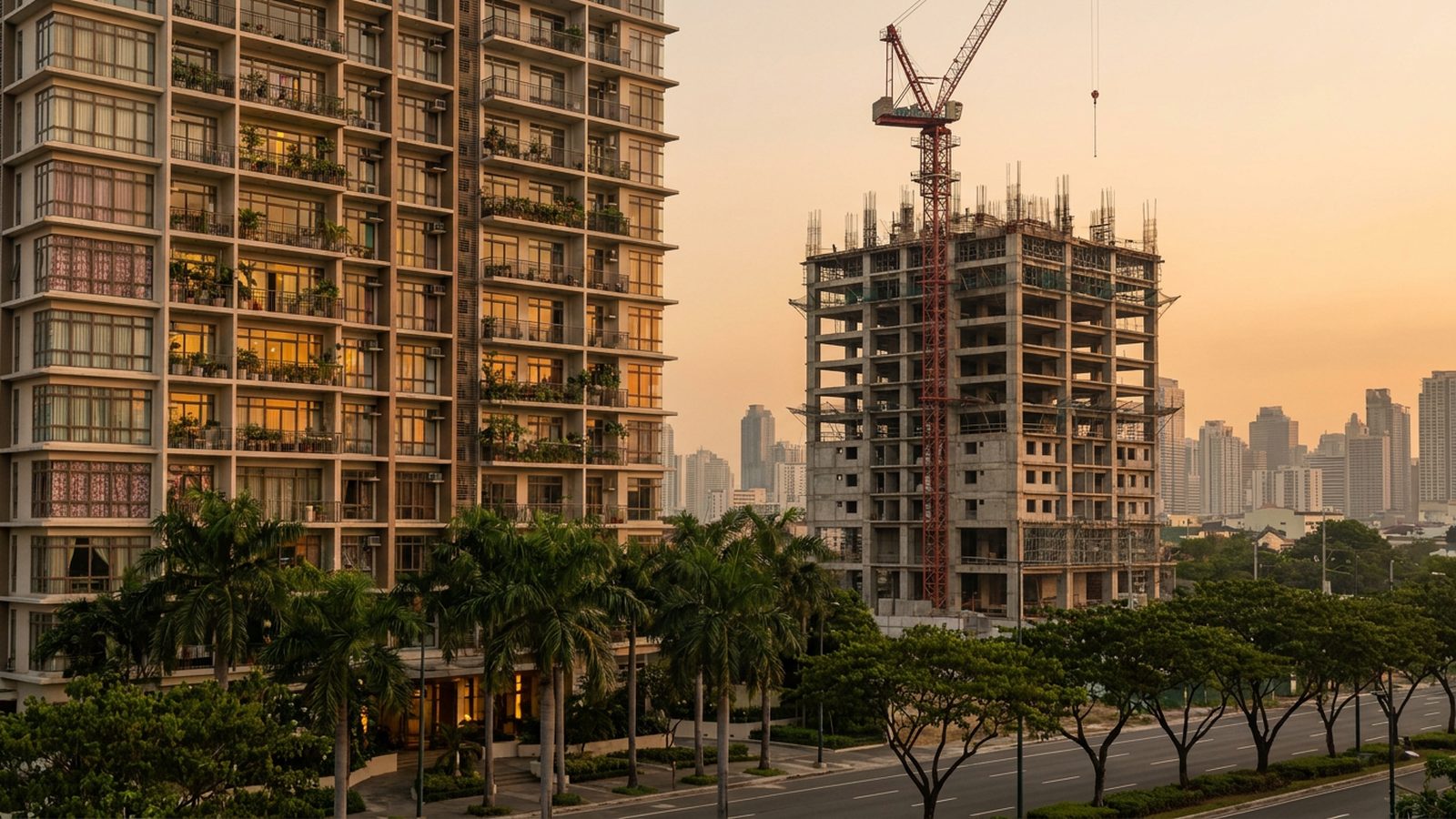
RFO condo vs pre-selling is the first fork in every condominium search in the Philippines, and most buyers take it without noticing. A ready for occupancy unit is finished: you can stand in it, measure it, check the water pressure and move in or rent it out the month after closing. A pre-selling unit is a floor plan and a turnover date two to five years away, sold at a lower entry price with the down payment stretched over the construction. Each one suits a different buyer, and the wrong choice shows up either as years of installments on an unfinished tower or as a finished unit bought at a price a patient buyer would not have paid. This guide sets the two side by side, on money, risk and timing, and shows where to find the completed buildings in each city from our own database.
What changes when the building already exists
The money changes first. On a pre-selling unit the down payment, typically 10% to 30% of the price, is spread without interest over the construction period, commonly 24 to 48 months, and the balance falls due at turnover; our guide to pre-selling condo payment terms runs the schemes on one unit. On an RFO unit the schedule is compressed: a down payment of 10% to 20% and the full balance within about 30 to 60 days, in cash or through a bank or Pag-IBIG loan that is applied for immediately, as our guide on how much down payment you really need sets out. The RFO buyer needs more cash sooner, and needs the loan approved now, on today's income, rather than on the income of the year the tower is finished.
The risk changes second. The pre-selling buyer carries construction risk: the turnover date that slips, the developer that stalls, the finished unit that differs from the model. The protections are real but partial, a license to sell to check before paying a reservation, and the Maceda Law refund of at least half of what was paid for a buyer who stops after two years of installments. The RFO buyer carries none of that; the building is the building. What remains is the ordinary risk of any resale or inventory purchase, which the turnover inspection checklist covers, with the added point that in a tower completed years ago the dues, the reserve fund and the state of the elevators are already on record and can be asked for.
The income changes third. An RFO unit rents from the first month; a pre-selling unit earns nothing until turnover, while the installments run. For a buyer who needs the rent to carry the loan, that gap decides the question by itself.
Where the price advantage sits
Developers price pre-selling below the finished product because the buyer is lending them the construction money and taking the construction risk, and they typically raise prices as the tower rises. That is the whole case for buying early: entry price and time. The case for RFO is that the inventory a developer still holds in a finished tower, and the units resale owners want out of, are negotiable in a way a launch price list is not, especially in a market with unsold stock. Our Mandaluyong guide notes that Metro Manila's oversupply gives buyers negotiating room on entry, and that room is widest on units that already exist.
We do not publish a single percentage for the gap between the two, because our listing price sample does not record the completion status of each unit and the gap moves with every project. What the sample does give is the market level: median asking prices of about ₱195,000 (about $3,110 / €2,780) per square meter in Makati and ₱198,000 (about $3,150 / €2,820) in Taguig, and ₱128,000 (about $2,040 / €1,820) in Mandaluyong, which our price guides for each city break down by unit type. Test any pre-selling quote against those medians: a launch price at or above the price of finished units nearby is a launch price with no discount in it.
Finding RFO buildings by city
Our building directory records the completion year where it is known, which makes a shortlist of finished towers quick to build. In Taguig, 25 of the 91 buildings in our directory carry a completion year up to 2025, from Alder Residences, 1,515 units finished in 2024, and Park Avenue at Grand Central Park in 2021, to Ivory Wood in 2019, Verawood Residences in 2020 and the older Grace Residences, with 3,579 units from 2016. In Makati 34 buildings carry a completion year up to 2025, including Park Central Towers and 100 West Makati in 2024, Red Residences in 2022 and San Antonio Residence in 2021. Quezon City has 22, among them Cameron Residences and Glam Residences in 2024, Infina Towers and Vine Residences in 2022 and The Celandine in 2021. Pasig has 14, led by Satori Residences, Fairlane Residences, The Velaris Residences and The Travertine at Portico, all 2024, and Lumiere Residences in 2020. Mandaluyong, the city where searches for ready units are most frequent, has nine, from The Olive Place in 2024 and Sheridan Towers in 2020 to Flair Towers and Avida Towers Centera in 2015.
On the other side of the ledger sit the towers with turnover still years out: Sage Residences in Mandaluyong in 2028, Fortis Residences in Makati in 2027, Le Pont Residences in Pasig in 2029 and Uptown Modern in Taguig in 2031. Each building page in our directory carries the year, the unit mix and the current listings, and our shortlists of the best condos in Taguig and BGC and the best condos in Mandaluyong sort the finished towers from the launches.
Which one to buy
Buy pre-selling if you have steady income for the next three years, no need to live in or rent the unit before then, and the discipline to treat the installments as a savings plan with a building at the end. Buy RFO if you need the unit now, if your loan approval is strong today and may not be later, if you want to see what you are paying for, or if the rent has to start paying the loan from month one. Investors in particular should compare a pre-selling launch price with the finished units next door before they sign, since the discount is the only reason to wait, and it is not always there.
Whichever you choose, the checks are the same: the license to sell for a project, the title and dues for a finished unit, and a written computation sheet you can keep. Current condos for sale across the metro show both kinds side by side, with the completion year on the building page.
This article is general information, not financial advice. Building counts and completion years are from BalayHub's building directory as of October 2026 and cover only buildings with a recorded year; prices are median asking figures from our listing price sample, not appraisals.
Dollar and euro figures are approximate conversions at ₱62.8 per US dollar and ₱70.2 per euro (ECB reference rates, 2026-10-13).
Frequently asked questions
What does RFO mean in a condo listing?
Ready for occupancy: the building is complete and the unit can be inspected, bought and occupied or rented within weeks of closing. A pre-selling unit is sold before or during construction from plans and a model unit, with turnover two to five years away. RFO units come from a developer's remaining inventory in a finished tower or from resale owners.
Is pre-selling cheaper than RFO?
Usually at launch, because the buyer lends the developer the construction money and carries the construction risk, and developers raise prices as the tower rises. The gap varies by project, and we do not publish one percentage for it. Compare any launch price with the finished units nearby: our listing sample puts median asking prices at about ₱195,000 (about $3,110 / €2,780) per square meter in Makati, ₱198,000 (about $3,150 / €2,820) in Taguig and ₱128,000 (about $2,040 / €1,820) in Mandaluyong.
How is the payment different for an RFO condo?
A pre-selling unit spreads a 10% to 30% down payment over the construction period, commonly 24 to 48 months, with the balance due at turnover. An RFO unit needs a 10% to 20% down payment and the full balance within about 30 to 60 days, in cash or through a bank or Pag-IBIG loan applied for immediately, so the buyer needs more cash sooner and a loan approval on today's income.
Which Metro Manila buildings are RFO?
In our building directory, with a recorded completion year up to 2025: 25 in Taguig, such as Alder Residences (2024) and Verawood Residences (2020); 34 in Makati, such as Park Central Towers and 100 West Makati (2024); 22 in Quezon City, such as Cameron Residences (2024) and Infina Towers (2022); 14 in Pasig, such as Satori Residences (2024); and 9 in Mandaluyong, such as The Olive Place (2024) and Sheridan Towers (2020). Each building page shows the year.
RFO condo vs pre-selling ang unang sangandaan sa bawat paghahanap ng condominium sa Pilipinas, at karamihan ng buyer ay dumadaan dito nang hindi napapansin. Tapos na ang ready for occupancy unit: puwede kang tumayo sa loob nito, sukatin ito, i-check ang water pressure at lumipat o ipaupa ito sa buwan pagkatapos ng closing. Ang pre-selling unit ay floor plan at turnover date na dalawa hanggang limang taon pa ang layo, ibinebenta sa mas mababang entry price na ang down payment ay hinahati-hati sa buong panahon ng construction. Bawat isa ay bagay sa ibang uri ng buyer, at ang maling pili ay lumalabas bilang mga taon ng installment sa hindi pa tapos na tower o bilang tapos nang unit na binili sa presyong hindi sana babayaran ng isang matiyagang buyer. Ipinagtatabi ng gabay na ito ang dalawa, sa pera, risk at timing, at ipinapakita kung saan makikita ang mga tapos nang building sa bawat lungsod mula sa aming sariling database.
Ano ang nagbabago kapag nakatayo na ang building
Pera ang unang nagbabago. Sa pre-selling unit, ang down payment, karaniwang 10% hanggang 30% ng presyo, ay hinahati nang walang interes sa buong panahon ng construction, kadalasang 24 hanggang 48 buwan, at ang balance ay dapat bayaran sa turnover; pinapatakbo ng aming gabay sa pre-selling condo payment terms ang mga scheme sa iisang unit. Sa RFO unit, mas siksik ang schedule: down payment na 10% hanggang 20% at ang buong balance sa loob ng mga 30 hanggang 60 araw, cash o sa pamamagitan ng bank o Pag-IBIG loan na agad ina-apply, gaya ng inilalatag ng aming gabay sa kung magkano talaga ang down payment na kailangan mo. Mas maraming cash ang kailangan ng RFO buyer nang mas maaga, at kailangan niyang ma-approve ang loan ngayon, batay sa kita ngayon, hindi sa kita sa taong matatapos ang tower.
Risk ang ikalawang nagbabago. Pasan ng pre-selling buyer ang construction risk: ang turnover date na naaantala, ang developer na tumitigil, ang tapos nang unit na iba sa model. Totoo pero bahagya lang ang mga proteksyon, ang license to sell na dapat i-check bago magbayad ng reservation, at ang refund sa ilalim ng Maceda Law na hindi bababa sa kalahati ng nabayaran para sa buyer na tumigil pagkatapos ng dalawang taon ng installment. Wala niyon ang pasan ng RFO buyer; ang building ay ang building. Ang natitira ay ang karaniwang risk ng anumang resale o pagbili mula sa inventory, na sinasaklaw ng turnover inspection checklist, dagdag pa ang puntong sa tower na natapos ilang taon na ang nakalipas, ang dues, ang reserve fund at ang kalagayan ng mga elevator ay nakatala na at puwedeng hingin.
Kita ang ikatlong nagbabago. Napapaupahan ang RFO unit mula sa unang buwan; walang kinikita ang pre-selling unit hanggang turnover, habang tumatakbo ang mga installment. Para sa buyer na kailangan ang renta para bayaran ang loan, ang gap na iyon lang ang nagpapasya sa tanong.
Saan nakalagay ang price advantage
Pinepresyuhan ng mga developer ang pre-selling nang mas mababa sa tapos nang produkto dahil pinapahiram ng buyer sa kanila ang pera para sa construction at pinapasan nito ang construction risk, at karaniwang itinataas nila ang presyo habang tumataas ang tower. Iyon ang buong argumento sa maagang pagbili: entry price at oras. Ang argumento para sa RFO ay ang inventory na hawak pa ng developer sa tapos nang tower, at ang mga unit na gustong bitawan ng mga resale owner, ay puwedeng tawaran sa paraang hindi puwede sa price list ng launch, lalo na sa market na may hindi nabebentang stock. Binabanggit ng aming gabay sa Mandaluyong na ang oversupply sa Metro Manila ay nagbibigay sa mga buyer ng puwang sa pakikipagtawaran sa entry, at pinakamalawak ang puwang na iyon sa mga unit na umiiral na.
Hindi kami naglalathala ng iisang porsyento para sa gap ng dalawa, dahil hindi nirerekord ng aming listing price sample ang completion status ng bawat unit at gumagalaw ang gap sa bawat proyekto. Ang ibinibigay ng sample ay ang antas ng market: median asking price na mga ₱195,000 (mga $3,110 / €2,780) kada square meter sa Makati at ₱198,000 (mga $3,150 / €2,820) sa Taguig, at ₱128,000 (mga $2,040 / €1,820) sa Mandaluyong, na hinihimay ng aming mga price guide para sa bawat lungsod ayon sa uri ng unit. Subukin ang anumang pre-selling quote laban sa mga median na iyon: ang launch price na kapantay o mas mataas sa presyo ng mga tapos nang unit sa malapit ay launch price na walang discount.
Paghahanap ng RFO building ayon sa lungsod
Nirerekord ng aming building directory ang completion year kung alam ito, kaya mabilis gumawa ng shortlist ng mga tapos nang tower. Sa Taguig, 25 sa 91 building sa aming directory ang may completion year hanggang 2025, mula sa Alder Residences, 1,515 unit na natapos noong 2024, at Park Avenue at Grand Central Park noong 2021, hanggang sa Ivory Wood noong 2019, Verawood Residences noong 2020 at sa mas lumang Grace Residences, na may 3,579 unit mula 2016. Sa Makati, 34 building ang may completion year hanggang 2025, kabilang ang Park Central Towers at 100 West Makati noong 2024, Red Residences noong 2022 at San Antonio Residence noong 2021. May 22 ang Quezon City, kabilang ang Cameron Residences at Glam Residences noong 2024, Infina Towers at Vine Residences noong 2022 at The Celandine noong 2021. May 14 ang Pasig, pinangungunahan ng Satori Residences, Fairlane Residences, The Velaris Residences at The Travertine at Portico, lahat 2024, at Lumiere Residences noong 2020. Ang Mandaluyong, ang lungsod kung saan pinakamadalas ang paghahanap ng ready na unit, ay may siyam, mula sa The Olive Place noong 2024 at Sheridan Towers noong 2020 hanggang sa Flair Towers at Avida Towers Centera noong 2015.
Sa kabilang panig ng ledger nakaupo ang mga tower na ilang taon pa ang turnover: Sage Residences sa Mandaluyong sa 2028, Fortis Residences sa Makati sa 2027, Le Pont Residences sa Pasig sa 2029 at Uptown Modern sa Taguig sa 2031. Bawat building page sa aming directory ay may taon, unit mix at mga kasalukuyang listing, at inihihiwalay ng aming mga shortlist ng pinakamagagandang condo sa Taguig at BGC at ng pinakamagagandang condo sa Mandaluyong ang mga tapos nang tower sa mga launch.
Alin ang bibilhin
Bumili ng pre-selling kung may tuloy-tuloy kang kita sa susunod na tatlong taon, walang pangangailangang tumira o magpaupa ng unit bago niyon, at may disiplinang ituring ang mga installment bilang savings plan na may building sa dulo. Bumili ng RFO kung kailangan mo ang unit ngayon, kung matibay ang loan approval mo ngayon at baka hindi na mamaya, kung gusto mong makita kung ano ang binabayaran mo, o kung kailangang magsimulang bayaran ng renta ang loan mula sa unang buwan. Ang mga investor lalo na ay dapat maghambing ng pre-selling launch price sa mga tapos nang unit sa katabi bago pumirma, dahil ang discount lang ang dahilan para maghintay, at hindi ito laging naroon.
Alinman ang piliin mo, pareho ang mga check: ang license to sell para sa proyekto, ang titulo at dues para sa tapos nang unit, at nakasulat na computation sheet na maitatabi mo. Ipinapakita ng mga kasalukuyang condo for sale sa buong metro ang dalawang uri nang magkatabi, na may completion year sa building page.
Ang artikulong ito ay pangkalahatang impormasyon, hindi financial advice. Ang bilang ng mga building at ang mga completion year ay mula sa building directory ng BalayHub noong Oktubre 2026 at sumasaklaw lang sa mga building na may nakarekord na taon; ang mga presyo ay median asking figure mula sa aming listing price sample, hindi mga appraisal.
Tinatayang conversion lang ang mga halaga sa dollar at euro, sa ₱62.8 kada US dollar at ₱70.2 kada euro (ECB reference rates, 2026-10-13).
Mga madalas itanong
Ano ang ibig sabihin ng RFO sa condo listing?
Ready for occupancy: kumpleto na ang building at ang unit ay puwedeng i-inspect, bilhin at tirhan o ipaupa sa loob ng ilang linggo pagkatapos ng closing. Ang pre-selling unit ay ibinebenta bago o habang may construction batay sa mga plano at model unit, na dalawa hanggang limang taon pa ang turnover. Ang mga RFO unit ay nagmumula sa natitirang inventory ng developer sa tapos nang tower o sa mga resale owner.
Mas mura ba ang pre-selling kaysa RFO?
Kadalasan sa launch, dahil pinapahiram ng buyer sa developer ang pera para sa construction at pinapasan nito ang construction risk, at itinataas ng mga developer ang presyo habang tumataas ang tower. Nag-iiba ang gap sa bawat proyekto, at hindi kami naglalathala ng iisang porsyento para dito. Ihambing ang anumang launch price sa mga tapos nang unit sa malapit: ayon sa aming listing sample, ang median asking price ay mga ₱195,000 (mga $3,110 / €2,780) kada square meter sa Makati, ₱198,000 (mga $3,150 / €2,820) sa Taguig at ₱128,000 (mga $2,040 / €1,820) sa Mandaluyong.
Paano naiiba ang pagbabayad para sa RFO condo?
Hinahati ng pre-selling unit ang 10% hanggang 30% na down payment sa buong panahon ng construction, kadalasang 24 hanggang 48 buwan, at ang balance ay dapat bayaran sa turnover. Kailangan ng RFO unit ng 10% hanggang 20% na down payment at ang buong balance sa loob ng mga 30 hanggang 60 araw, cash o sa pamamagitan ng bank o Pag-IBIG loan na agad ina-apply, kaya mas maraming cash ang kailangan ng buyer nang mas maaga at loan approval batay sa kita ngayon.
Aling mga building sa Metro Manila ang RFO?
Sa aming building directory, na may nakarekord na completion year hanggang 2025: 25 sa Taguig, gaya ng Alder Residences (2024) at Verawood Residences (2020); 34 sa Makati, gaya ng Park Central Towers at 100 West Makati (2024); 22 sa Quezon City, gaya ng Cameron Residences (2024) at Infina Towers (2022); 14 sa Pasig, gaya ng Satori Residences (2024); at 9 sa Mandaluyong, gaya ng The Olive Place (2024) at Sheridan Towers (2020). Ipinapakita ng bawat building page ang taon.
Ang RFO condo vs pre-selling mao ang unang sanga sa dalan sa matag pagpangita og condominium sa Pilipinas, ug kadaghanan sa mga buyer moagi niini nga wala makamatikod. Ang ready for occupancy nga unit human na: makatindog ka sulod niini, makasukod, makasusi sa pressure sa tubig ug makabalhin o makapaabang niini sa bulan human sa closing. Ang pre-selling nga unit usa ka floor plan ug usa ka turnover date nga duha hangtod lima ka tuig pa ang kalay-on, gibaligya sa mas ubos nga entry price nga ang down payment gipatas-an sa panahon sa konstruksyon. Ang matag usa angay sa lahi nga buyer, ug ang sayop nga pagpili motungha bisan isip mga tuig sa installment sa wala pa mahuman nga tower o isip human na nga unit nga gipalit sa presyo nga dili unta bayran sa mapailubon nga buyer. Kini nga giya nagbutang sa duha nga magtapad, sa kwarta, sa risgo ug sa timing, ug nagpakita kung asa makit-an ang mga nahuman nga building sa matag siyudad gikan sa among kaugalingong database.
Unsay mausab kung anaa na ang building
Ang kwarta ang unang mausab. Sa pre-selling nga unit, ang down payment, kasagaran 10% hangtod 30% sa presyo, gipatas-an nga walay interes sa panahon sa konstruksyon, kasagaran 24 hangtod 48 ka bulan, ug ang balance bayran sa turnover; ang among giya sa pre-selling condo payment terms nagpadagan sa mga scheme sa usa ka unit. Sa RFO nga unit, gipamubo ang schedule: down payment nga 10% hangtod 20% ug ang tibuok balance sulod sa mga 30 hangtod 60 ka adlaw, cash o pinaagi sa loan sa bangko o Pag-IBIG nga i-apply dayon, sumala sa gipasabot sa among giya sa pila gyud ang down payment nga imong gikinahanglan. Ang RFO buyer nagkinahanglan og mas daghang cash nga mas sayo, ug nagkinahanglan nga ma-aprobahan ang loan karon, base sa kasamtangang kita, dili sa kita sa tuig nga mahuman ang tower.
Ang risgo ang ikaduhang mausab. Ang pre-selling buyer nagpas-an sa construction risk: ang turnover date nga maulahi, ang developer nga mohunong, ang nahuman nga unit nga lahi sa model. Tinuod ang mga proteksyon pero dili kompleto, ang license to sell nga susihon sa dili pa mobayad og reservation, ug ang refund ubos sa Maceda Law nga labing menos katunga sa nabayad para sa buyer nga mohunong human sa duha ka tuig nga installment. Ang RFO buyer walay gipas-an niana; ang building mao ang building. Ang nahabilin mao ang naandang risgo sa bisan unsang resale o inventory nga pagpalit, nga gitabonan sa turnover inspection checklist, dugang ang punto nga sa tower nga nahuman mga tuig na ang milabay, ang dues, ang reserve fund ug ang kahimtang sa mga elevator naka-rekord na ug mahimong pangayoon.
Ang kita ang ikatulong mausab. Ang RFO nga unit mapaabangan gikan sa unang bulan; ang pre-selling nga unit walay kita hangtod sa turnover, samtang nagdagan ang mga installment. Para sa buyer nga nagkinahanglan sa abang aron mabayran ang loan, kanang gintang na mismo ang modesisyon sa pangutana.
Asa nahimutang ang bentaha sa presyo
Ang mga developer nagpresyo sa pre-selling nga mas ubos sa nahuman nga produkto kay ang buyer nagpahulam kanila sa kwarta sa konstruksyon ug nagpas-an sa construction risk, ug kasagaran ilang patas-on ang presyo samtang motaas ang tower. Mao kana ang tibuok rason sa pagpalit og sayo: entry price ug panahon. Ang rason para sa RFO mao nga ang inventory nga gihuptan pa sa developer sa nahuman nga tower, ug ang mga unit nga gusto nang ibaligya sa mga resale owner, ma-negosyo sa paagi nga dili mahimo sa launch price list, labi na sa merkado nga adunay wala mahalin nga stock. Ang among giya sa Mandaluyong nag-ingon nga ang oversupply sa Metro Manila naghatag sa mga buyer og luna sa pag-negosyo sa pagsulod, ug kanang luna pinakalapad sa mga unit nga anaa na.
Wala kami magmantala og usa ka porsyento para sa gintang tali sa duha, kay ang among listing price sample wala magrekord sa completion status sa matag unit ug ang gintang mausab sa matag proyekto. Ang gihatag sa sample mao ang lebel sa merkado: median nga asking price nga mga ₱195,000 (mga $3,110 / €2,780) kada square meter sa Makati ug ₱198,000 (mga $3,150 / €2,820) sa Taguig, ug ₱128,000 (mga $2,040 / €1,820) sa Mandaluyong, nga gibahin-bahin sa among mga price guide para sa matag siyudad sumala sa klase sa unit. Sulayi ang bisan unsang pre-selling quote batok niadtong mga median: ang launch price nga pareho o mas taas sa presyo sa mga nahuman nga unit sa duol usa ka launch price nga walay discount.
Pagpangita og RFO nga mga building kada siyudad
Ang among building directory nagrekord sa tuig sa pagkahuman kung nahibaloan kini, nga maoy nakapaspas sa paghimo og shortlist sa mga nahuman nga tower. Sa Taguig, 25 sa 91 ka building sa among directory adunay tuig sa pagkahuman hangtod 2025, gikan sa Alder Residences, 1,515 ka unit nga nahuman sa 2024, ug Park Avenue at Grand Central Park sa 2021, ngadto sa Ivory Wood sa 2019, Verawood Residences sa 2020 ug sa mas daan nga Grace Residences, nga adunay 3,579 ka unit gikan sa 2016. Sa Makati 34 ka building ang adunay tuig sa pagkahuman hangtod 2025, lakip ang Park Central Towers ug 100 West Makati sa 2024, Red Residences sa 2022 ug San Antonio Residence sa 2021. Ang Quezon City adunay 22, lakip niini ang Cameron Residences ug Glam Residences sa 2024, Infina Towers ug Vine Residences sa 2022 ug The Celandine sa 2021. Ang Pasig adunay 14, gipangunahan sa Satori Residences, Fairlane Residences, The Velaris Residences ug The Travertine at Portico, tanan 2024, ug Lumiere Residences sa 2020. Ang Mandaluyong, ang siyudad diin pinakasubsob ang pagpangita og mga ready nga unit, adunay siyam, gikan sa The Olive Place sa 2024 ug Sheridan Towers sa 2020 ngadto sa Flair Towers ug Avida Towers Centera sa 2015.
Sa pikas bahin sa listahan anaa ang mga tower nga mga tuig pa ang turnover: Sage Residences sa Mandaluyong sa 2028, Fortis Residences sa Makati sa 2027, Le Pont Residences sa Pasig sa 2029 ug Uptown Modern sa Taguig sa 2031. Ang matag building page sa among directory adunay tuig, ang unit mix ug ang kasamtangang mga listing, ug ang among mga shortlist sa pinakamaayong condo sa Taguig ug BGC ug sa pinakamaayong condo sa Mandaluyong nagbulag sa mga nahuman nga tower gikan sa mga launch.
Asa ang paliton
Palita ang pre-selling kung aduna kay kanunay nga kita para sa sunod nga tulo ka tuig, walay panginahanglan nga mopuyo o mopaabang sa unit sa dili pa kana, ug ang disiplina sa pagtagad sa mga installment isip savings plan nga adunay building sa katapusan. Palita ang RFO kung gikinahanglan nimo ang unit karon, kung lig-on ang imong loan approval karon ug tingali dili na unya, kung gusto nimong makita ang imong gibayran, o kung ang abang kinahanglan magsugod sa pagbayad sa loan gikan sa unang bulan. Ang mga investor labi na kinahanglan mokompara sa pre-selling launch price sa mga nahuman nga unit sa tupad sa dili pa sila mopirma, kay ang discount mao ra ang rason sa paghulat, ug dili kini kanunay anaa.
Bisan unsa ang imong pilion, pareho ra ang mga pagsusi: ang license to sell para sa proyekto, ang titulo ug dues para sa nahuman nga unit, ug sinulat nga computation sheet nga imong matipigan. Ang kasamtangang mga condo nga gibaligya sa tibuok metro nagpakita sa duha ka klase nga magtapad, nga ang tuig sa pagkahuman anaa sa building page.
Kini nga artikulo kinatibuk-ang impormasyon, dili financial advice. Ang ihap sa mga building ug ang mga tuig sa pagkahuman gikan sa building directory sa BalayHub sukad Oktubre 2026 ug naglakip lang sa mga building nga adunay narekord nga tuig; ang mga presyo median nga asking figure gikan sa among listing price sample, dili appraisal.
Banabana lang ang mga conversion sa dollar ug euro, sa ₱62.8 matag US dollar ug ₱70.2 matag euro (ECB reference rates, 2026-10-13).
Mga kasagarang pangutana
Unsay pasabot sa RFO sa condo listing?
Ready for occupancy: kompleto na ang building ug ang unit mahimong susihon, paliton ug puy-an o paabangan sulod sa pipila ka semana human sa closing. Ang pre-selling nga unit gibaligya sa dili pa o samtang nagkonstruksyon gikan sa mga plano ug sa model unit, nga ang turnover duha hangtod lima ka tuig pa. Ang mga RFO nga unit gikan sa nahabilin nga inventory sa developer sa nahuman nga tower o gikan sa mga resale owner.
Mas barato ba ang pre-selling kaysa RFO?
Kasagaran sa launch, kay ang buyer nagpahulam sa developer sa kwarta sa konstruksyon ug nagpas-an sa construction risk, ug ang mga developer nagpataas sa presyo samtang motaas ang tower. Ang gintang managlahi kada proyekto, ug wala kami magmantala og usa ka porsyento niini. Ikompara ang bisan unsang launch price sa mga nahuman nga unit sa duol: ang among listing sample nagbutang sa median nga asking price sa mga ₱195,000 (mga $3,110 / €2,780) kada square meter sa Makati, ₱198,000 (mga $3,150 / €2,820) sa Taguig ug ₱128,000 (mga $2,040 / €1,820) sa Mandaluyong.
Unsa ang kalainan sa pagbayad para sa RFO condo?
Ang pre-selling nga unit nagpatas-an sa 10% hangtod 30% nga down payment sa panahon sa konstruksyon, kasagaran 24 hangtod 48 ka bulan, nga ang balance bayran sa turnover. Ang RFO nga unit nagkinahanglan og 10% hangtod 20% nga down payment ug ang tibuok balance sulod sa mga 30 hangtod 60 ka adlaw, cash o pinaagi sa loan sa bangko o Pag-IBIG nga i-apply dayon, mao nga ang buyer nagkinahanglan og mas daghang cash nga mas sayo ug loan approval base sa kasamtangang kita.
Unsa nga mga building sa Metro Manila ang RFO?
Sa among building directory, nga adunay narekord nga tuig sa pagkahuman hangtod 2025: 25 sa Taguig, sama sa Alder Residences (2024) ug Verawood Residences (2020); 34 sa Makati, sama sa Park Central Towers ug 100 West Makati (2024); 22 sa Quezon City, sama sa Cameron Residences (2024) ug Infina Towers (2022); 14 sa Pasig, sama sa Satori Residences (2024); ug 9 sa Mandaluyong, sama sa The Olive Place (2024) ug Sheridan Towers (2020). Ang matag building page nagpakita sa tuig.
Looking for a place?
See all listings →Read next
Vacation Home in the Philippines: Tagaytay, Baguio or Beach
Vacation home in the Philippines: condos at ₱70,600 per sqm in Tagaytay, ₱57,200 in Baguio, ₱65,000 on Mactan, with upkeep, climate and rental income.
Documents Needed to Buy a House in the Philippines (2026)
The documents needed to buy a house in the Philippines: IDs, TIN, PSA marriage certificate, cedula, Pag-IBIG number, income papers, and where to get each.
Cancel a Mortgage Annotation on Title After Full Payment
A mortgage annotation on title stays after the loan is paid. How to cancel it at the Registry of Deeds: the release, the documents and the common snags.