
Sep 8, 2026 · by BalayHub Admin · 6 min read
House Construction Cost per Square Meter Philippines 2026
House construction cost per square meter in the Philippines 2026: ₱28,000 basic to ₱75,000 high end, what the rate excludes, and a full 100 sqm budget.
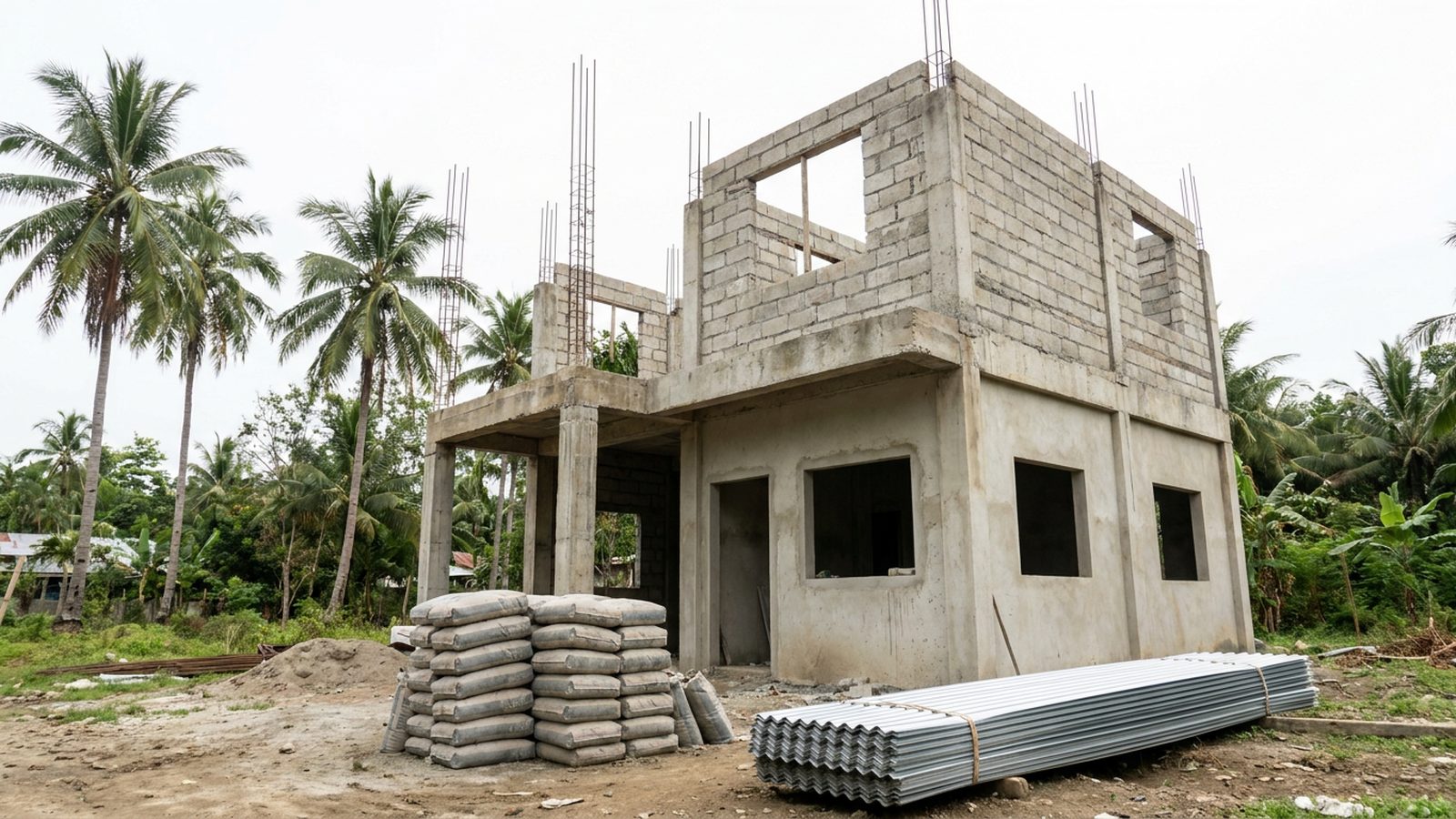
Ask three contractors what a house costs and you get three numbers that do not agree, so here is the range that actually holds in 2026. The house construction cost per square meter in the Philippines runs from about ₱28,000 (about $448 / €386) for a basic finish to ₱75,000 (about $1,200 / €1,030) and beyond for a high end build, with most family homes landing between ₱35,000 and ₱50,000 (about $560 to $800 / €482 to €689). That figure covers structure, roof, walls, floors, plumbing, wiring and finishes. It does not cover the lot, the permits, the design fees or the furniture, and the gap between the quoted rate and the money you finally spend is where most budgets break.
This guide sets out what the rate includes, why government statistics show a number that is a third of the contractor quote, and how to turn the rate into a full budget for a real house on a real lot.
What the per square meter rate actually covers
A turnkey quote per square meter is the price of the finished shell and its finishes: excavation and foundation, columns and beams, hollow block walls, roof framing and roofing, ceilings, floor tiles, doors and windows, paint, plumbing fixtures, wiring, outlets and lights.
Three things sit outside that contract almost every time. The land, which in the provinces our listing data puts at a median of ₱8,000 (about $128 / €110) per square meter across 73 lots for sale, and far more near a city. The professional fees for the architect and structural engineer, who sign the plans the city requires. And the building permit and local fees, which are computed on the declared cost of the project.
2026 construction cost per square meter by finish
Two current guides from Manila design and build firms give the same shape. Architect Manila quotes ₱28,000 to ₱35,000 (about $448 to $560 / €386 to €482) per square meter for a basic finish, ₱36,000 to ₱50,000 (about $576 to $800 / €496 to €689) for the mid range that most primary residences use, and ₱50,000 to ₱75,000 (about $800 to $1,200 / €689 to €1,030) and up for luxury work with custom architecture and premium finishes. JEMM Builders lands at ₱30,000 to ₱35,000 (about $480 to $560 / €413 to €482) for an economy build with standard hollow blocks and corrugated roofing, ₱35,000 to ₱45,000 (about $560 to $720 / €482 to €620) for a standard home with branded fixtures and better waterproofing, and ₱45,000 to ₱65,000 (about $720 to $1,040 / €620 to €895) and beyond once marble floors, custom cabinetry and imported materials enter the picture.
The practical reading: a simple, well built provincial house is a ₱30,000 to ₱35,000 (about $480 to $560 / €413 to €482) job, a city family home with a proper kitchen and good tiles is ₱38,000 (about $608 / €523) to ₱48,000 (about $768 / €661), and anything above ₱55,000 (about $880 / €758) is a design decision rather than a construction necessity.
Why the PSA says ₱7,000 and your contractor says ₱40,000
The Philippine Statistics Authority publishes the declared cost of every approved building permit. Its February 2026 release put the average residential construction at ₱8,092.85 (about $129 / €111) per square meter, with single houses at ₱7,059.35 (about $113 / €97) and residential condominiums at ₱17,443.77 (about $279 / €240). Those are the values owners write on the permit application, on which the permit fee is computed: the bare structure as declared, not the turnkey house, and owners have every incentive to declare low. Treat the PSA figure as a floor for the raw structure and the contractor range as the price of a house you can move into.
What moves the number up or down
Location is first. Labor and hauling in Metro Manila, Cebu or Davao cost more than in a provincial town, and a lot on a hillside or reclaimed soil can need deeper foundations or piles that add hundreds of thousands before a wall goes up. Design is second: a rectangular two storey house with a simple roof is the cheapest shape to build, while roof decks, split levels, cantilevers and curved walls push the rate into the next tier. Materials are third: the tile grade, the roofing sheet, the window system and the kitchen counters are the big swings.
A worked budget for a 100 square meter house
Take a three bedroom, single storey house of 100 square meters on a 150 square meter provincial lot, built to a standard finish at ₱40,000 (about $640 / €551) per square meter.
Construction contract: ₱4,000,000 (about $64,000 / €55,100). Lot at the ₱8,000 (about $128 / €110) per square meter median from our listings: ₱1,200,000 (about $19,200 / €16,500). Design and engineering fees, building permit, electrical and water connections, fence and gate: budget ₱500,000 to ₱700,000 (about $8,000 to $11,200 / €6,890 to €9,640) as a working allowance and firm it up with quotes. Furniture and appliances: ₱300,000 to ₱600,000 (about $4,800 to $9,600 / €4,130 to €8,260) depending on taste. The all in figure is ₱6.0 million to ₱6.5 (about $96,000 to $0.10 / €82,600 to €0.09) million, of which the quoted "construction cost" was two thirds.
For comparison, the average house price in the Philippines in 2026 from our listings sits at a ₱7.5 million (about $120,000 / €103,000) median, so building can beat buying in the provinces if you already own or can cheaply buy the lot. In Metro Manila the lot price flips that math. Check what land costs per square meter by province and browse land for sale before you fall in love with a floor plan, and read how to buy a lot safely so the title does not become the expensive part.
Paying the contractor without losing control
Get at least three itemized quotations on the same set of plans, not a "package price" on a sketch. Insist on a bill of quantities so you can see what a square meter is buying. Pay against progress, not against promises: a 15 to 20 percent downpayment, then billings tied to milestones such as foundation, roof, roughing in and finishes, with 10 percent retained until the punch list is closed. A written construction agreement that names the scope, the schedule, the payment terms and who pays for changes is worth more than any handshake; our contracts tool has a Philippine construction contract you can adapt.
If you are funding the build from abroad, the money side has its own traps. How OFWs fund house construction covers remittance timing and who holds the purse, and building a house from overseas explains how to supervise a site you cannot visit. If a bank or Pag-IBIG loan is part of the plan, run the numbers first on the Pag-IBIG loan calculator; a construction loan releases in tranches, so your cash has to cover each stage before the release catches up.
Construction rates are indicative ranges drawn from published 2026 guides and PSA data; every site, design and contractor quote differs. Get itemized quotations and professional advice before you sign.
Dollar and euro figures are approximate conversions at ₱62.5 per US dollar and ₱72.6 per euro (ECB reference rates, 2026-09-08).
Frequently asked questions
How much does it cost to build a house per square meter in the Philippines in 2026?
Roughly ₱28,000 to ₱35,000 (about $448 to $560 / €386 to €482) per square meter for a basic finish, ₱35,000 to ₱50,000 (about $560 to $800 / €482 to €689) for the standard finish most family homes use, and ₱50,000 to ₱75,000 (about $800 to $1,200 / €689 to €1,030) or more for high end work, based on 2026 guides from Manila design and build firms. The rate covers the finished structure and its fixtures but not the lot, permits, design fees or furniture.
Why does the PSA report only about ₱7,000 per square meter for houses?
Because the PSA figure is the cost owners declare on the building permit application, on which the permit fee is computed. In February 2026 the average declared cost for single houses was ₱7,059.35 (about $113 / €97) per square meter. It reflects the bare structure as declared, not a turnkey house with finishes, so it is a floor for the raw build, not a price you can move into.
What is not included in a per square meter construction quote?
Almost always the lot, the architect's and engineer's fees, the building permit and local government fees, utility connections, the fence, gate and driveway, and all furniture and appliances. On a ₱4 million (about $64,000 / €55,100) construction contract those items typically add ₱1.5 million to ₱2.5 (about $24,000 to $0.04 / €20,700 to €0.03) million, more if the lot is in a city, so budget the whole project and not just the contract.
How much does a 100 square meter house cost to build in total?
At a standard finish of ₱40,000 (about $640 / €551) per square meter the construction contract is ₱4 million (about $64,000 / €55,100). Add a 150 square meter provincial lot at the ₱8,000 (about $128 / €110) per square meter median from our listings, about ₱1.2 (about $0.02 / €0.02) million, plus fees, permits, connections and furnishing, and the all in figure lands around ₱6.0 million to ₱6.5 million (about $96,000 to $104,000 / €82,600 to €89,500). In Metro Manila the lot alone can exceed that.
How should I pay a contractor to stay protected?
Sign a written construction agreement with an itemized bill of quantities, then pay against progress: a 15 to 20 percent downpayment and milestone billings for foundation, roof, roughing in and finishes, with about 10 percent retained until the punch list is closed. Get three quotes on the same plans, and ask for the validity period and an escalation clause because cement and steel prices move during the year.
Tanungin mo ang tatlong contractor kung magkano ang isang bahay at makakakuha ka ng tatlong numerong hindi magkakatugma, kaya narito ang range na talagang tumatama sa 2026. Ang house construction cost per square meter sa Pilipinas ay nasa humigit-kumulang ₱28,000 (mga $448 / €386) para sa basic finish hanggang ₱75,000 (mga $1,200 / €1,030) at higit pa para sa high end build, at karamihan ng family home ay nasa pagitan ng ₱35,000 at ₱50,000 (mga $560 hanggang $800 / €482 hanggang €689). Sakop ng halagang iyon ang structure, bubong, pader, sahig, plumbing, wiring at finishes. Hindi nito sakop ang lote, ang mga permit, ang design fees o ang muwebles, at ang agwat sa pagitan ng quoted rate at ng perang gagastusin mo sa huli ang lugar kung saan nasisira ang karamihan ng budget.
Inilalatag ng guide na ito kung ano ang kasama sa rate, kung bakit nagpapakita ang government statistics ng numerong isang-katlo lang ng contractor quote, at kung paano gawing buong budget ang rate para sa totoong bahay sa totoong lote.
Ano talaga ang sakop ng per square meter rate
Ang turnkey quote per square meter ay ang presyo ng tapos na shell at ng mga finish nito: excavation at foundation, mga column at beam, hollow block na pader, roof framing at roofing, kisame, floor tiles, mga pinto at bintana, pintura, plumbing fixtures, wiring, outlets at ilaw.
Tatlong bagay ang halos laging nasa labas ng kontratang iyon. Ang lupa, na sa mga probinsya ay inilalagay ng aming listing data sa median na ₱8,000 (mga $128 / €110) per square meter sa 73 lots for sale, at mas mataas pa nang malaki malapit sa siyudad. Ang professional fees para sa architect at structural engineer, na pumipirma sa mga planong hinihingi ng city. At ang building permit at local fees, na kinokompyut batay sa declared cost ng project.
2026 construction cost per square meter ayon sa finish
Dalawang kasalukuyang guide mula sa mga design and build firm sa Manila ang nagbibigay ng parehong hugis. Ang Architect Manila ay nagku-quote ng ₱28,000 hanggang ₱35,000 (mga $448 hanggang $560 / €386 hanggang €482) per square meter para sa basic finish, ₱36,000 hanggang ₱50,000 (mga $576 hanggang $800 / €496 hanggang €689) para sa mid range na ginagamit ng karamihan ng primary residence, at ₱50,000 hanggang ₱75,000 (mga $800 hanggang $1,200 / €689 hanggang €1,030) pataas para sa luxury work na may custom architecture at premium finishes. Ang JEMM Builders ay nasa ₱30,000 hanggang ₱35,000 (mga $480 hanggang $560 / €413 hanggang €482) para sa economy build na may standard hollow blocks at corrugated roofing, ₱35,000 hanggang ₱45,000 (mga $560 hanggang $720 / €482 hanggang €620) para sa standard home na may branded fixtures at mas mahusay na waterproofing, at ₱45,000 hanggang ₱65,000 (mga $720 hanggang $1,040 / €620 hanggang €895) at higit pa kapag pumasok na ang marble floors, custom cabinetry at imported materials.
Ang praktikal na basa: ang simple at maayos na pagkakagawang bahay sa probinsya ay trabahong ₱30,000 (mga $480 / €413) hanggang ₱35,000 (mga $560 / €482), ang family home sa siyudad na may maayos na kusina at magandang tiles ay ₱38,000 (mga $608 / €523) hanggang ₱48,000 (mga $768 / €661), at ang anumang lampas sa ₱55,000 (mga $880 / €758) ay desisyon sa disenyo at hindi pangangailangan sa konstruksyon.
Bakit ₱7,000 ang sabi ng PSA at ₱40,000 ang sabi ng contractor mo
Inilalathala ng Philippine Statistics Authority ang declared cost ng bawat approved building permit. Ang February 2026 release nito ay naglagay sa average residential construction sa ₱8,092.85 (mga $129 / €111) per square meter, na ang single houses ay nasa ₱7,059.35 (mga $113 / €97) at ang residential condominiums ay nasa ₱17,443.77 (mga $279 / €240). Iyon ang mga halagang isinusulat ng mga may-ari sa permit application, kung saan kinokompyut ang permit fee: ang hubad na structure ayon sa deklarasyon, hindi ang turnkey na bahay, at may lahat ng dahilan ang mga may-ari para magdeklara nang mababa. Ituring ang PSA figure bilang floor para sa raw structure at ang contractor range bilang presyo ng bahay na maaari mo nang lipatan.
Ano ang nagpapataas o nagpapababa ng numero
Una ang lokasyon. Mas mahal ang labor at hauling sa Metro Manila, Cebu o Davao kaysa sa isang bayan sa probinsya, at ang lote sa gilid ng burol o sa reclaimed na lupa ay maaaring mangailangan ng mas malalim na foundation o piles na nagdadagdag ng daan-daang libo bago pa man tumayo ang isang pader. Pangalawa ang disenyo: ang rectangular na two storey na bahay na may simpleng bubong ang pinakamurang hugis na itayo, habang ang roof decks, split levels, cantilevers at curved walls ay nagtutulak sa rate papunta sa susunod na tier. Pangatlo ang materyales: ang grade ng tiles, ang roofing sheet, ang window system at ang kitchen counters ang pinakamalalaking nagpapagalaw ng presyo.
Halimbawang budget para sa 100 square meter na bahay
Kunin natin ang three bedroom, single storey na bahay na 100 square meters sa 150 square meter na lote sa probinsya, na itinayo sa standard finish na ₱40,000 (mga $640 / €551) per square meter.
Construction contract: ₱4,000,000 (mga $64,000 / €55,100). Lote sa ₱8,000 (mga $128 / €110) per square meter na median mula sa aming listings: ₱1,200,000 (mga $19,200 / €16,500). Design at engineering fees, building permit, koneksyon ng kuryente at tubig, bakod at gate: mag-budget ng ₱500,000 hanggang ₱700,000 (mga $8,000 hanggang $11,200 / €6,890 hanggang €9,640) bilang working allowance at pagtibayin ito gamit ang mga quote. Muwebles at appliances: ₱300,000 hanggang ₱600,000 (mga $4,800 hanggang $9,600 / €4,130 hanggang €8,260) depende sa panlasa. Ang all in na halaga ay ₱6.0 million hanggang ₱6.5 (mga $96,000 hanggang $0.10 / €82,600 hanggang €0.09) million, kung saan ang quoted na "construction cost" ay dalawang-katlo lang.
Para sa paghahambing, ang average na presyo ng bahay sa Pilipinas sa 2026 mula sa aming listings ay nasa ₱7.5 million (mga $120,000 / €103,000) na median, kaya maaaring mas mabuti ang magpatayo kaysa bumili sa mga probinsya kung pag-aari mo na o mura mong mabibili ang lote. Sa Metro Manila, binabaligtad ng presyo ng lote ang kalkulasyong iyon. Tingnan kung magkano ang lupa per square meter ayon sa probinsya at mag-browse ng land for sale bago ka mahulog sa isang floor plan, at basahin kung paano bumili ng lote nang ligtas para hindi ang titulo ang maging mahal na bahagi.
Pagbabayad sa contractor nang hindi nawawala ang kontrol
Kumuha ng hindi bababa sa tatlong itemized quotation sa iisang set ng plano, hindi "package price" sa isang sketch. Igiit ang bill of quantities para makita mo kung ano ang binibili ng bawat square meter. Magbayad ayon sa progreso, hindi ayon sa pangako: 15 hanggang 20 percent na downpayment, pagkatapos ay mga billing na nakatali sa mga milestone gaya ng foundation, bubong, roughing in at finishes, na may 10 percent na naka-retain hanggang maisara ang punch list. Ang nakasulat na construction agreement na nagsasaad ng scope, schedule, payment terms at kung sino ang magbabayad sa mga pagbabago ay mas mahalaga kaysa anumang handshake; ang aming contracts tool ay may Philippine construction contract na maaari mong i-adapt.
Kung mula sa abroad ang pondo ng pagpapatayo, may sariling mga patibong ang panig ng pera. Sinasaklaw ng paano pinopondohan ng mga OFW ang house construction ang timing ng remittance at kung sino ang may hawak ng pera, at ipinapaliwanag ng pagpapatayo ng bahay mula sa ibang bansa kung paano mag-supervise ng site na hindi mo mabibisita. Kung bahagi ng plano ang bank o Pag-IBIG loan, patakbuhin muna ang mga numero sa Pag-IBIG loan calculator; ang construction loan ay inire-release nang tranche by tranche, kaya kailangang sagutin ng cash mo ang bawat yugto bago makahabol ang release.
Ang construction rates ay indicative na range na hango sa mga nailathalang 2026 guide at PSA data; magkakaiba ang bawat site, disenyo at contractor quote. Kumuha ng itemized quotations at professional advice bago ka pumirma.
Tinatayang conversion lang ang mga halaga sa dollar at euro, sa ₱62.5 kada US dollar at ₱72.6 kada euro (ECB reference rates, 2026-09-08).
Mga madalas itanong
Magkano ang gastos sa pagpapatayo ng bahay per square meter sa Pilipinas sa 2026?
Humigit-kumulang ₱28,000 hanggang ₱35,000 (mga $448 hanggang $560 / €386 hanggang €482) per square meter para sa basic finish, ₱35,000 hanggang ₱50,000 (mga $560 hanggang $800 / €482 hanggang €689) para sa standard finish na ginagamit ng karamihan ng family home, at ₱50,000 hanggang ₱75,000 (mga $800 hanggang $1,200 / €689 hanggang €1,030) o higit pa para sa high end work, batay sa 2026 guides mula sa mga design and build firm sa Manila. Sakop ng rate ang tapos na structure at ang mga fixture nito pero hindi ang lote, mga permit, design fees o muwebles.
Bakit humigit-kumulang ₱7,000 per square meter lang ang iniuulat ng PSA para sa mga bahay?
Dahil ang PSA figure ay ang halagang idinedeklara ng mga may-ari sa building permit application, kung saan kinokompyut ang permit fee. Noong February 2026 ang average declared cost para sa single houses ay ₱7,059.35 (mga $113 / €97) per square meter. Sinasalamin nito ang hubad na structure ayon sa deklarasyon, hindi ang turnkey na bahay na may finishes, kaya floor ito para sa raw build, hindi presyong maaari mo nang lipatan.
Ano ang hindi kasama sa per square meter construction quote?
Halos palagi, ang lote, ang fees ng architect at engineer, ang building permit at local government fees, utility connections, ang bakod, gate at driveway, at lahat ng muwebles at appliances. Sa ₱4 million (mga $64,000 / €55,100) na construction contract, karaniwang nagdadagdag ang mga iyon ng ₱1.5 million hanggang ₱2.5 (mga $24,000 hanggang $0.04 / €20,700 hanggang €0.03) million, mas malaki pa kung nasa siyudad ang lote, kaya i-budget ang buong project at hindi lang ang kontrata.
Magkano ang kabuuang gastos sa pagpapatayo ng 100 square meter na bahay?
Sa standard finish na ₱40,000 (mga $640 / €551) per square meter, ang construction contract ay ₱4 million (mga $64,000 / €55,100). Idagdag ang 150 square meter na lote sa probinsya sa ₱8,000 (mga $128 / €110) per square meter na median mula sa aming listings, humigit-kumulang ₱1.2 (mga $0.02 / €0.02) million, kasama ang fees, permits, koneksyon at muwebles, at ang all in na halaga ay nasa paligid ng ₱6.0 million hanggang ₱6.5 million (mga $96,000 hanggang $104,000 / €82,600 hanggang €89,500). Sa Metro Manila, ang lote pa lang ay maaaring lumampas doon.
Paano ako dapat magbayad sa contractor para manatiling protektado?
Pumirma ng nakasulat na construction agreement na may itemized bill of quantities, pagkatapos ay magbayad ayon sa progreso: 15 hanggang 20 percent na downpayment at milestone billings para sa foundation, bubong, roughing in at finishes, na may humigit-kumulang 10 percent na naka-retain hanggang maisara ang punch list. Kumuha ng tatlong quote sa iisang plano, at hingin ang validity period at escalation clause dahil gumagalaw ang presyo ng semento at bakal sa loob ng taon.
Pangutan-a ang tulo ka contractor kung pila ang bili sa usa ka balay ug tulo ka lainlaing numero ang imong madawat, mao nga ania ang range nga tinuod gyud nga mohaom sa 2026. Ang house construction cost per square meter sa Pilipinas mosugod sa mga ₱28,000 (mga $448 / €386) para sa basic finish hangtod ₱75,000 (mga $1,200 / €1,030) pataas para sa high end nga build, ug ang kadaghanan sa mga balay sa pamilya mahulog tali sa ₱35,000 ug ₱50,000 (mga $560 hangtod $800 / €482 hangtod €689). Sakop niini nga numero ang structure, atop, mga bungbong, salog, plumbing, wiring ug finishes. Wala niini masakop ang lote, ang mga permit, ang design fees o ang mga muwebles, ug ang kal-ang tali sa gi-quote nga rate ug sa kwarta nga imong tinuod nga magasto mao ang dapit diin kasagaran maguba ang budget.
Gipasabot niini nga guide kung unsa ang sakop sa rate, ngano ang statistics sa gobyerno nagpakita og numero nga ikatulo lang sa quote sa contractor, ug unsaon paghimo sa rate ngadto sa kompletong budget para sa tinuod nga balay sa tinuod nga lote.
Unsa gyud ang sakop sa per square meter rate
Ang turnkey quote per square meter mao ang presyo sa nahuman nga shell ug sa mga finishes niini: excavation ug foundation, mga poste ug beam, bungbong nga hollow block, roof framing ug atop, kisame, floor tiles, mga pultahan ug bintana, pintura, plumbing fixtures, wiring, mga outlet ug suga.
Tulo ka butang ang hapit kanunay gawas niana nga kontrata. Ang yuta, nga sa mga probinsya gibutang sa among listing data sa median nga ₱8,000 (mga $128 / €110) per square meter sa 73 ka lote nga gibaligya, ug mas mahal pa kaayo duol sa siyudad. Ang professional fees para sa architect ug structural engineer, nga maoy mopirma sa mga plano nga gikinahanglan sa siyudad. Ug ang building permit ug mga local fee, nga gikwenta base sa declared cost sa project.
Construction cost per square meter sa 2026 sumala sa finish
Duha ka bag-ong guide gikan sa mga design and build firm sa Manila ang naghatag og susamang hulma. Ang Architect Manila nag-quote og ₱28,000 hangtod ₱35,000 (mga $448 hangtod $560 / €386 hangtod €482) per square meter para sa basic finish, ₱36,000 hangtod ₱50,000 (mga $576 hangtod $800 / €496 hangtod €689) para sa mid range nga gigamit sa kadaghanan sa mga primary residence, ug ₱50,000 hangtod ₱75,000 (mga $800 hangtod $1,200 / €689 hangtod €1,030) pataas para sa luxury nga trabaho nga naay custom architecture ug premium finishes. Ang JEMM Builders naa sa ₱30,000 hangtod ₱35,000 (mga $480 hangtod $560 / €413 hangtod €482) para sa economy build nga naay standard hollow blocks ug corrugated roofing, ₱35,000 hangtod ₱45,000 (mga $560 hangtod $720 / €482 hangtod €620) para sa standard nga balay nga naay branded fixtures ug mas maayong waterproofing, ug ₱45,000 hangtod ₱65,000 (mga $720 hangtod $1,040 / €620 hangtod €895) pataas kung mosulod na ang marble floors, custom cabinetry ug imported nga materyales.
Ang praktikal nga pagbasa: ang simple ug maayong pagkatukod nga balay sa probinsya usa ka ₱30,000 hangtod ₱35,000 (mga $480 hangtod $560 / €413 hangtod €482) nga trabaho, ang balay sa pamilya sa siyudad nga naay tarong nga kusina ug maayong tiles ₱38,000 (mga $608 / €523) hangtod ₱48,000 (mga $768 / €661), ug ang bisan unsa nga labaw sa ₱55,000 (mga $880 / €758) desisyon na sa design imbes nga kinahanglanon sa konstruksyon.
Ngano ₱7,000 ang giingon sa PSA ug ₱40,000 ang giingon sa imong contractor
Gipatik sa Philippine Statistics Authority ang declared cost sa matag aprobadong building permit. Ang February 2026 release niini nagbutang sa average residential construction sa ₱8,092.85 (mga $129 / €111) per square meter, nga ang single houses naa sa ₱7,059.35 (mga $113 / €97) ug ang residential condominiums sa ₱17,443.77 (mga $279 / €240). Kana ang mga kantidad nga gisulat sa mga tag-iya sa permit application, diin gikwenta ang permit fee: ang hubo nga structure sumala sa gideklara, dili ang turnkey nga balay, ug naay tanang rason ang mga tag-iya nga magdeklara og ubos. Isipa ang numero sa PSA isip floor para sa raw structure ug ang range sa contractor isip presyo sa balay nga mahimo nimong balhinan.
Unsa ang mopataas o mopaubos sa numero
Una ang lokasyon. Ang labor ug hauling sa Metro Manila, Cebu o Davao mas mahal kaysa sa lungsod sa probinsya, ug ang lote sa bakilid o sa reclaimed nga yuta mahimong magkinahanglan og mas lawom nga foundation o mga pile nga modugang og gatosan ka libo usa pa motindog ang bungbong. Ikaduha ang design: ang rectangular nga two storey nga balay nga naay simpleng atop mao ang pinakabarato nga hulma nga tukoron, samtang ang roof decks, split levels, cantilevers ug kurbadong bungbong moduso sa rate ngadto sa sunod nga tier. Ikatulo ang mga materyales: ang grade sa tile, ang roofing sheet, ang window system ug ang kitchen counters mao ang mga dagkong swing.
Usa ka gikwenta nga budget para sa 100 square meter nga balay
Kuhaa ang three bedroom, single storey nga balay nga 100 square meters sa 150 square meter nga lote sa probinsya, gitukod sa standard finish sa ₱40,000 (mga $640 / €551) per square meter.
Construction contract: ₱4,000,000 (mga $64,000 / €55,100). Lote sa ₱8,000 (mga $128 / €110) per square meter nga median gikan sa among mga listing: ₱1,200,000 (mga $19,200 / €16,500). Design ug engineering fees, building permit, koneksyon sa kuryente ug tubig, koral ug gate: mag-budget og ₱500,000 hangtod ₱700,000 (mga $8,000 hangtod $11,200 / €6,890 hangtod €9,640) isip working allowance ug pilita kini pinaagi sa mga quote. Mga muwebles ug appliances: ₱300,000 hangtod ₱600,000 (mga $4,800 hangtod $9,600 / €4,130 hangtod €8,260) depende sa gusto. Ang all in nga numero ₱6.0 million hangtod ₱6.5 (mga $96,000 hangtod $0.10 / €82,600 hangtod €0.09) million, diin ang gi-quote nga "construction cost" duha sa tulo ka bahin lang niini.
Para sa pagtandi, ang average nga presyo sa balay sa Pilipinas sa 2026 gikan sa among mga listing naa sa ₱7.5 million (mga $120,000 / €103,000) nga median, mao nga ang pagtukod mahimong molabaw sa pagpalit sa mga probinsya kung imo na ang lote o barato nimo kining mapalit. Sa Metro Manila mabaliktad ang kwenta tungod sa presyo sa lote. Tan-awa kung pila ang bili sa yuta per square meter sa matag probinsya ug susiha ang yuta nga gibaligya usa ka mahigugma sa usa ka floor plan, ug basaha kung unsaon pagpalit og lote nga luwas aron dili mahimong mahal nga bahin ang titulo.
Pagbayad sa contractor nga dili mawala ang kontrol
Pangayo og labing menos tulo ka itemized quotation sa samang set sa mga plano, dili "package price" sa usa ka sketch. Pugsa nga naay bill of quantities aron makita nimo kung unsa ang gipalit sa usa ka square meter. Bayad sumala sa progreso, dili sumala sa mga saad: 15 hangtod 20 percent nga downpayment, unya mga billing nga gigapos sa mga milestone sama sa foundation, atop, roughing in ug finishes, nga naay 10 percent nga gihawiran hangtod masira ang punch list. Ang sinulat nga construction agreement nga nagngalan sa scope, sa schedule, sa payment terms ug kung kinsa ang mobayad sa mga kausaban mas bililhon kaysa bisan unsang handshake; ang among contracts tool naay Philippine construction contract nga mahimo nimong i-adapt.
Kung gikan sa abroad ang pondo sa pagtukod, naay kaugalingong mga lit-ag ang bahin sa kwarta. Ang unsaon sa mga OFW pagpondo sa house construction nagsakop sa timing sa remittance ug kung kinsa ang maghupot sa kwarta, ug ang pagtukod og balay gikan sa overseas nagpasabot kung unsaon pag-supervise sa site nga dili nimo mabisita. Kung bahin sa plano ang bank o Pag-IBIG loan, kwentaha una ang mga numero sa Pag-IBIG loan calculator; ang construction loan i-release sa mga tranche, mao nga kinahanglan masakop sa imong cash ang matag stage usa pa moabot ang release.
Ang mga construction rate mga indicative range nga gikuha gikan sa gipatik nga 2026 guides ug PSA data; lahi ang matag site, design ug quote sa contractor. Pangayo og itemized quotations ug professional advice usa ka mopirma.
Banabana lang ang mga conversion sa dollar ug euro, sa ₱62.5 matag US dollar ug ₱72.6 matag euro (ECB reference rates, 2026-09-08).
Mga kasagarang pangutana
Pila ang bili sa pagtukod og balay per square meter sa Pilipinas sa 2026?
Mga ₱28,000 hangtod ₱35,000 (mga $448 hangtod $560 / €386 hangtod €482) per square meter para sa basic finish, ₱35,000 hangtod ₱50,000 (mga $560 hangtod $800 / €482 hangtod €689) para sa standard finish nga gigamit sa kadaghanan sa mga balay sa pamilya, ug ₱50,000 hangtod ₱75,000 (mga $800 hangtod $1,200 / €689 hangtod €1,030) o labaw pa para sa high end nga trabaho, base sa 2026 guides gikan sa mga design and build firm sa Manila. Sakop sa rate ang nahuman nga structure ug ang mga fixture niini apan dili ang lote, mga permit, design fees o mga muwebles.
Ngano mga ₱7,000 per square meter lang ang gi-report sa PSA para sa mga balay?
Tungod kay ang numero sa PSA mao ang cost nga gideklara sa mga tag-iya sa building permit application, diin gikwenta ang permit fee. Niadtong February 2026 ang average nga declared cost para sa single houses ₱7,059.35 (mga $113 / €97) per square meter. Nagpakita kini sa hubo nga structure sumala sa gideklara, dili ang turnkey nga balay nga naay finishes, mao nga floor kini para sa raw build, dili presyo nga mahimo nimong balhinan.
Unsa ang wala masakop sa per square meter nga construction quote?
Hapit kanunay ang lote, ang fees sa architect ug engineer, ang building permit ug mga fee sa local government, mga koneksyon sa utilities, ang koral, gate ug driveway, ug ang tanang muwebles ug appliances. Sa ₱4 million (mga $64,000 / €55,100) nga construction contract kasagaran modugang kini nga mga butang og ₱1.5 million hangtod ₱2.5 (mga $24,000 hangtod $0.04 / €20,700 hangtod €0.03) million, mas dako pa kung naa sa siyudad ang lote, mao nga i-budget ang tibuok project ug dili lang ang kontrata.
Pila ang kinatibuk-ang bili sa pagtukod og 100 square meter nga balay?
Sa standard finish nga ₱40,000 (mga $640 / €551) per square meter, ₱4 million (mga $64,000 / €55,100) ang construction contract. Idugang ang 150 square meter nga lote sa probinsya sa ₱8,000 (mga $128 / €110) per square meter nga median gikan sa among mga listing, mga ₱1.2 (mga $0.02 / €0.02) million, dugang ang mga fee, permit, koneksyon ug pag-furnish, ug ang all in nga numero moabot sa mga ₱6.0 million hangtod ₱6.5 million (mga $96,000 hangtod $104,000 / €82,600 hangtod €89,500). Sa Metro Manila ang lote lang molabaw na niana.
Unsaon nako pagbayad sa contractor aron magpabilin nga protektado?
Pirmahi ang sinulat nga construction agreement nga naay itemized bill of quantities, unya bayad sumala sa progreso: 15 hangtod 20 percent nga downpayment ug mga milestone billing para sa foundation, atop, roughing in ug finishes, nga naay mga 10 percent nga gihawiran hangtod masira ang punch list. Pangayo og tulo ka quote sa samang mga plano, ug pangutan-a ang validity period ug ang escalation clause kay molihok ang presyo sa semento ug steel sulod sa tuig.
Browse properties on BalayHub
See all listings →
Read next
Rent or Buy in Metro Manila 2026: The Break-even Math
Rent or buy in Metro Manila: a one bedroom rents for ₱25,000 and sells for ₱7.7M. The monthly cost of owning, the break even growth rate and the horizon.
Land Title Annotations Philippines: What Each Entry Means
Land title annotations Philippines buyers must read: mortgage, lis pendens, adverse claim, levy, easement and the Rule 74 entry, and how to clear each one.
RFO Condo vs Pre-Selling in the Philippines: Which to Buy
RFO condo vs pre-selling: cash needed now or stretched over 24 to 48 months, construction risk, rent from month one, and the finished buildings by city.