
Nov 1, 2026 · by BalayHub Admin · 7 min read
Buy a Lot and Build or Buy a House: The 2026 Cost Math
Buy a lot and build or buy a finished house? Median house ₱8M for 138 sqm, lots ₱16,204 per sqm: the build budget line by line and who wins where.
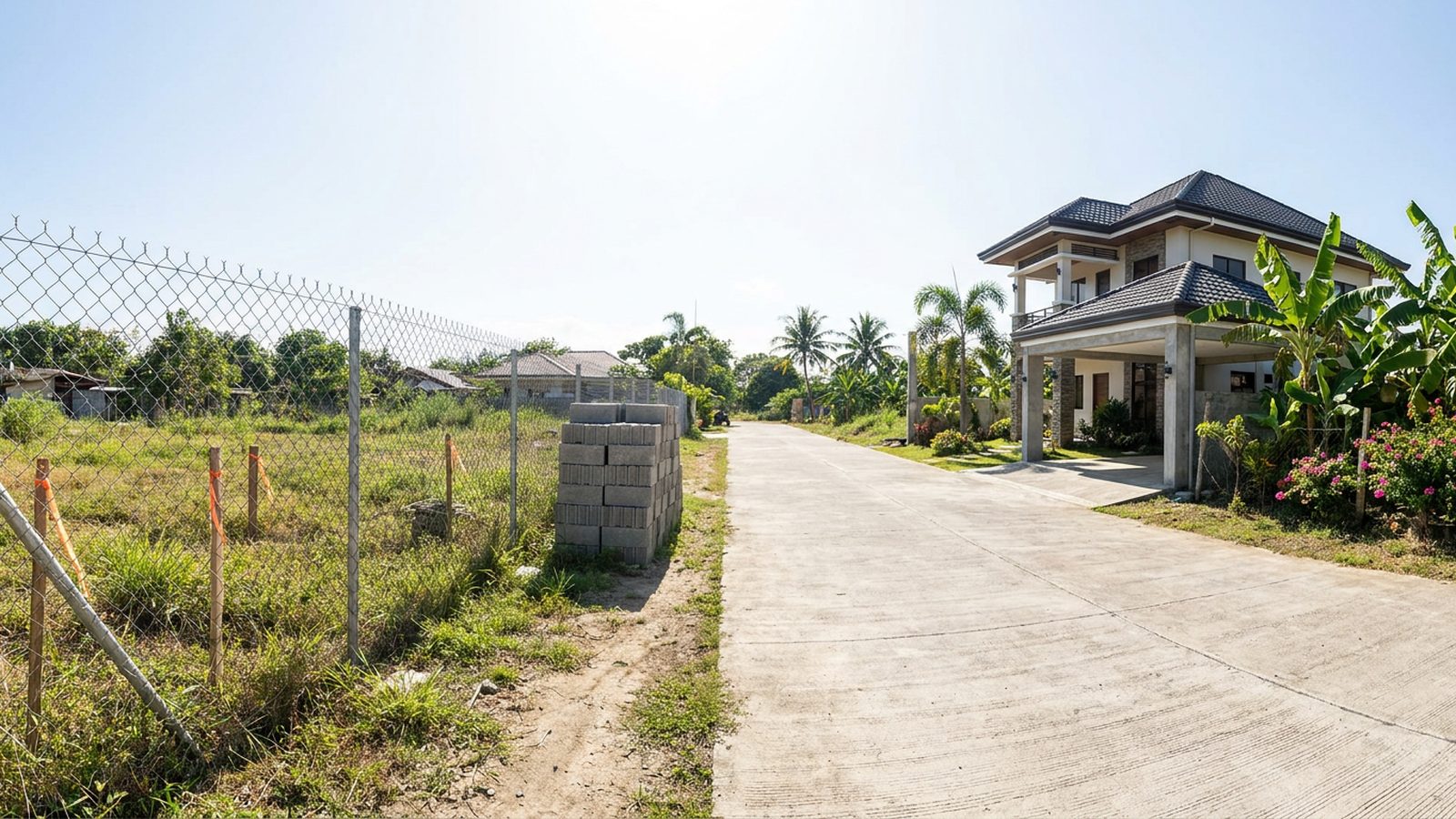
Whether to buy a lot and build or buy a finished house is the first decision most Filipino families make about a home, and it is usually made on instinct. The numbers from our own listings make it a calculation. In October 2026 the median house for sale on BalayHub is ₱8,000,000 (about $126,000 / €112,000) for 138 square meters of floor area on a 120 square meter lot, and across those houses the median price per square meter of floor area is about ₱68,700 (about $1,080 / €964). A residential lot of 80 to 1,000 square meters sells for a median ₱16,204 (about $255 / €227) per square meter, and a standard finish costs ₱36,000 to ₱50,000 (about $566 to $787 / €505 to €702) per square meter to build. Put those together and the answer depends almost entirely on what the land costs where you want to live. This guide runs the math three ways, lists the costs each side hides, and says who should build and who should buy.
The build budget, line by line
Take the same 138 square meter house on a 120 square meter lot that the market sells for ₱8,000,000 (about $126,000 / €112,000), and price it as a build.
| Item | Province lot (₱6,000 (about $94 / €84) per sqm) | National median lot (₱16,204 (about $255 / €227) per sqm) | City lot (₱30,000 (about $472 / €421) per sqm) |
|---|---|---|---|
| Lot, 120 sqm | ₱720,000 (about $11,300 / €10,100) | ₱1,944,480 (about $30,600 / €27,300) | ₱3,600,000 (about $56,600 / €50,500) |
| Lot transfer costs, about 4% | ₱28,800 (about $453 / €404) | ₱77,779 (about $1,220 / €1,090) | ₱144,000 (about $2,270 / €2,020) |
| Construction, 138 sqm at ₱40,000 (about $629 / €561) | ₱5,520,000 (about $86,900 / €77,500) | ₱5,520,000 (about $86,900 / €77,500) | ₱5,520,000 (about $86,900 / €77,500) |
| Design, permits, connections, fence (allowance) | ₱600,000 (about $9,440 / €8,420) | ₱600,000 (about $9,440 / €8,420) | ₱600,000 (about $9,440 / €8,420) |
| Total | ₱6,868,800 (about $108,000 / €96,400) | ₱8,142,259 (about $128,000 / €114,000) | ₱9,864,000 (about $155,000 / €138,000) |
The lot prices are the lower quartile, the median and roughly the upper quartile of the 41 residential lots in our sample, so the three columns are real places rather than scenarios: a town lot in Quezon Province or Bohol, a subdivision lot in Cavite or Cebu, a lot in Baguio or a Metro Manila suburb. The ₱40,000 (about $629 / €561) construction rate sits inside the standard finish range two Manila design and build firms quote for 2026, as our guide to the house construction cost per square meter sets out; a basic provincial build at ₱32,000 (about $504 / €449) takes about ₱1,100,000 (about $17,300 / €15,400) off every column, and a ₱55,000 (about $865 / €772) finish adds ₱2,070,000 (about $32,600 / €29,000). The allowance for design and engineering fees, the building permit, electrical and water connections and the perimeter fence is the working figure from the same guide, to be firmed up with quotes. Transfer costs on the lot are the buyer's usual documentary stamp, transfer tax and registration fees, about 4% of the lot price.
What the comparison says
Against the ₱8,000,000 (about $126,000 / €112,000) median house, building wins by about ₱1,100,000 (about $17,300 / €15,400) on cheap provincial land, costs about ₱140,000 (about $2,200 / €1,960) more on median land, close enough to call even, and loses by about ₱1,900,000 (about $29,900 / €26,700) on city land. The result is driven by one line. Construction costs the same ₱40,000 (about $629 / €561) a square meter in Bohol and in Baguio, but the lot under it costs five times more in one than the other, so the question "build or buy" is really the question "what is land worth here".
There is a second reading. The finished house median mixes old houses on large lots in the provinces with new townhouses on 60 square meter lots in the cities. Where the resale stock is old, a build gives you a new house for the price of a tired one, and the comparison understates the case for building. Where the stock is new developer housing, the developer bought the land in bulk, built fifty identical units and bundled financing, and a one off build rarely beats that price. Our guide to the land price per square meter gives the lot medians by province to put into the first row of the table, and the land listings and houses for sale on BalayHub are where the two numbers for your own town come from.
The costs the build side hides
The table above is the visible budget. Four costs sit outside it. Time is the first: a build runs eight months to a year on a good site, and a family that rents meanwhile pays the median ₱25,000 (about $393 / €351) a month for a one bedroom in Metro Manila from our rent or buy analysis, or ₱250,000 to ₱300,000 (about $3,930 to $4,720 / €3,510 to €4,210) over the build, before any overrun. Overruns are the second, and they come from changes you make after the slab is poured rather than from the contractor's rate. VAT is the third: a VAT registered contractor's quote may or may not include the 12%, and the difference on a ₱5,520,000 (about $86,900 / €77,500) contract is ₱662,400 (about $10,400 / €9,290), so the question belongs in the first meeting. The fourth is the lot itself. A lot bought cheap because the paper was thin is the most expensive line in the whole project, and our guide to buying land in the Philippines lists what has to be true of the title, the survey and the access road before the first peso.
Financing is different too. Pag-IBIG finances construction on a lot the borrower already owns, and lot purchase plus construction in one loan, but the title must be in your name and clean because the land is the only collateral at the start, and the loan is released in tranches as an inspector confirms each stage. Pag-IBIG Fund Circular 403 lists construction and lot purchase among the loan purposes and caps a financed residential lot at 1,000 square meters. The staged release protects a remote owner more than it annoys them, as our guide to funding a house construction from abroad explains, but it means the contractor is paid behind the work rather than ahead of it, and the contract has to say so.
The costs the buy side hides
A finished house hides its costs in the fine print rather than the schedule. A developer house comes with a homeowners association, dues and deed restrictions on what you may build, and sometimes a turnover that slides. A resale house comes with the previous owner's unpaid amilyar, which follows the title, and with a structure whose roof, plumbing and wiring are a known age; a house inspection costs a fraction of a repair. Either way the buyer pays the transfer taxes on the full price rather than on the lot alone, roughly 3% to 4%, and a house financed through a bank is appraised at the bank's number, not the seller's. The upside is certainty: the price is the price, the house exists, and the loan is a single ordinary mortgage that our Pag-IBIG loan calculator can size in a minute.
Who should build and who should buy
Build if you already own the lot or can buy one at provincial prices, if you can supervise the site or pay someone you trust to do it, and if you can carry rent and a construction loan at the same time for a year. The reward is a new house to your own plan for the price of a used one. Buy if the land where you want to live costs ₱25,000 (about $393 / €351) a square meter or more, well above the roughly ₱15,000 (about $236 / €210) at which the table's build and buy totals meet, if you need to move within six months, or if the financing has to be simple; in the cities the developer's land price is one you cannot match. If the choice is between a condo and either kind of house, our comparison of condo versus house and lot covers the running costs that the purchase price leaves out.
This article is general information computed from BalayHub listing medians and published 2026 construction rates, not a quotation. Get written estimates for the lot, the build and the permits in your own municipality before deciding.
Source: Pag-IBIG Fund Circular No. 403, Supreme Court E-Library.
Dollar and euro figures are approximate conversions at ₱63.5 per US dollar and ₱71.3 per euro (ECB reference rates, 2026-11-02).
Frequently asked questions
Is it cheaper to build a house or buy one in the Philippines?
It depends on the land. On our October 2026 medians a 138 square meter house on a 120 square meter lot costs about ₱6.9 million (about $109,000 / €96,800) to build on provincial land at ₱6,000 (about $94 / €84) per square meter, about ₱8.1 million (about $127,000 / €114,000) on median land at ₱16,204 (about $255 / €227), and about ₱9.9 million (about $156,000 / €139,000) on city land at ₱30,000 (about $472 / €421), against a median finished house price of ₱8,000,000 (about $126,000 / €112,000). Building wins where land is cheap and loses where it is not.
How much does it cost to build a 100 square meter house in the Philippines in 2026?
At the ₱36,000 to ₱50,000 (about $566 to $787 / €505 to €702) per square meter that Manila design and build firms quote for a standard finish, the construction contract runs ₱3.6 million to ₱5 million (about $56,600 to $78,700 / €50,500 to €70,200), with ₱40,000 (about $629 / €561) a square meter, or ₱4 million (about $62,900 / €56,100), as a working middle. Add the lot, roughly 4% in lot transfer costs, and an allowance of about ₱500,000 to ₱700,000 (about $7,870 to $11,000 / €7,020 to €9,820) for design fees, the building permit, utility connections and a fence.
Can I get a Pag-IBIG loan to buy a lot and build a house?
Yes. Pag-IBIG Fund Circular 403 lists the purchase of a residential lot of up to 1,000 square meters, house construction on a lot you own, and lot purchase plus construction among the housing loan purposes. The lot title must be in your name and free of encumbrances, and construction loans are released in tranches as a Fund inspector confirms each stage, so the contractor is paid behind the work.
How long does it take to build a house in the Philippines?
Eight months to a year is the usual range for a single family house once the permit is issued, and longer when the owner is abroad or changes the plan during construction. Budget the rent you will pay in the meantime: at the Metro Manila median of ₱25,000 (about $393 / €351) a month for a one bedroom, a ten to twelve month build adds ₱250,000 to ₱300,000 (about $3,930 to $4,720 / €3,510 to €4,210) that a finished house does not cost you.
What costs does buying a finished house hide?
Transfer taxes and fees of about 3% to 4% on the full price rather than on the lot alone, the previous owner's unpaid real property tax, which follows the title, association dues and deed restrictions in a developer subdivision, and the age of the roof, plumbing and wiring in a resale. The compensations are certainty on price and date and a single ordinary mortgage instead of a staged construction loan.
Kung bibili ng lot at magpapatayo o bibili ng tapos na bahay ang unang desisyon ng karamihan ng pamilyang Pilipino tungkol sa tahanan, at kadalasan itong ginagawa batay sa instinct. Ginagawa itong kalkulasyon ng mga numero mula sa aming sariling mga listing. Noong Oktubre 2026, ang median na bahay for sale sa BalayHub ay ₱8,000,000 (mga $126,000 / €112,000) para sa 138 square meter ng floor area sa 120 square meter na lot, at sa mga bahay na iyon ang median na presyo kada square meter ng floor area ay humigit-kumulang ₱68,700 (mga $1,080 / €964). Ang residential lot na 80 hanggang 1,000 square meter ay nabibili sa median na ₱16,204 (mga $255 / €227) kada square meter, at ang standard finish ay nagkakahalaga ng ₱36,000 hanggang ₱50,000 (mga $566 hanggang $787 / €505 hanggang €702) kada square meter para itayo. Pagsamahin ang mga iyon at ang sagot ay halos buong nakadepende sa presyo ng lupa kung saan mo gustong tumira. Pinapatakbo ng gabay na ito ang math sa tatlong paraan, inililista ang mga gastos na itinatago ng bawat panig, at sinasabi kung sino ang dapat magpatayo at sino ang dapat bumili.
Ang build budget, linya por linya
Kunin ang parehong 138 square meter na bahay sa 120 square meter na lot na ibinebenta ng market sa ₱8,000,000 (mga $126,000 / €112,000), at presyuhan ito bilang build.
| Item | Lot sa probinsya (₱6,000 (mga $94 / €84) kada sqm) | National median lot (₱16,204 (mga $255 / €227) kada sqm) | Lot sa city (₱30,000 (mga $472 / €421) kada sqm) |
|---|---|---|---|
| Lot, 120 sqm | ₱720,000 (mga $11,300 / €10,100) | ₱1,944,480 (mga $30,600 / €27,300) | ₱3,600,000 (mga $56,600 / €50,500) |
| Lot transfer costs, humigit-kumulang 4% | ₱28,800 (mga $453 / €404) | ₱77,779 (mga $1,220 / €1,090) | ₱144,000 (mga $2,270 / €2,020) |
| Construction, 138 sqm sa ₱40,000 (mga $629 / €561) | ₱5,520,000 (mga $86,900 / €77,500) | ₱5,520,000 (mga $86,900 / €77,500) | ₱5,520,000 (mga $86,900 / €77,500) |
| Design, mga permit, connections, bakod (allowance) | ₱600,000 (mga $9,440 / €8,420) | ₱600,000 (mga $9,440 / €8,420) | ₱600,000 (mga $9,440 / €8,420) |
| Kabuuan | ₱6,868,800 (mga $108,000 / €96,400) | ₱8,142,259 (mga $128,000 / €114,000) | ₱9,864,000 (mga $155,000 / €138,000) |
Ang mga presyo ng lot ay ang lower quartile, ang median at humigit-kumulang ang upper quartile ng 41 residential lot sa aming sample, kaya ang tatlong column ay tunay na mga lugar at hindi mga scenario: isang town lot sa Quezon Province o Bohol, isang subdivision lot sa Cavite o Cebu, isang lot sa Baguio o sa isang suburb ng Metro Manila. Ang ₱40,000 (mga $629 / €561) na construction rate ay nasa loob ng standard finish range na quote ng dalawang Manila design and build firm para sa 2026, gaya ng inilalatag ng aming gabay sa house construction cost kada square meter; ang basic na provincial build sa ₱32,000 (mga $504 / €449) ay nagbabawas ng humigit-kumulang ₱1,100,000 (mga $17,300 / €15,400) sa bawat column, at ang ₱55,000 (mga $865 / €772) na finish ay nagdaragdag ng ₱2,070,000 (mga $32,600 / €29,000). Ang allowance para sa design at engineering fees, building permit, electrical at water connection at perimeter fence ay ang working figure mula sa parehong gabay, na dapat kumpirmahin sa pamamagitan ng mga quote. Ang transfer costs sa lot ay ang karaniwang documentary stamp, transfer tax at registration fees ng buyer, humigit-kumulang 4% ng presyo ng lot.
Ano ang sinasabi ng paghahambing
Laban sa ₱8,000,000 (mga $126,000 / €112,000) na median na bahay, panalo ang pagpapatayo ng humigit-kumulang ₱1,100,000 (mga $17,300 / €15,400) sa murang lupa sa probinsya, mas mahal ng humigit-kumulang ₱140,000 (mga $2,200 / €1,960) sa median na lupa, sapat na lapit para tawaging tabla, at talo ng humigit-kumulang ₱1,900,000 (mga $29,900 / €26,700) sa lupa sa city. Isang linya ang nagdidikta ng resulta. Pareho ang gastos ng construction na ₱40,000 (mga $629 / €561) kada square meter sa Bohol at sa Baguio, pero ang lot sa ilalim nito ay limang beses na mas mahal sa isa kaysa sa isa, kaya ang tanong na "magpatayo o bumili" ay talagang ang tanong na "magkano ang halaga ng lupa dito".
May ikalawang pagbasa. Pinaghahalo ng median ng tapos na bahay ang mga lumang bahay sa malalaking lot sa probinsya at mga bagong townhouse sa 60 square meter na lot sa mga city. Kung saan luma ang resale stock, nagbibigay sa iyo ang build ng bagong bahay sa presyo ng pagod na bahay, at minamaliit ng paghahambing ang argumento para sa pagpapatayo. Kung saan bagong developer housing ang stock, binili ng developer ang lupa nang bulto, nagtayo ng limampung magkakaparehong unit at isinama ang financing, at bihirang matalo ng isahang build ang presyong iyon. Ibinibigay ng aming gabay sa presyo ng lupa kada square meter ang mga median ng lot kada probinsya na ilalagay sa unang row ng table, at ang mga listing ng lupa at mga bahay for sale sa BalayHub ang pinagmumulan ng dalawang numero para sa sarili mong bayan.
Ang mga gastos na itinatago ng build side
Ang table sa itaas ang nakikitang budget. Apat na gastos ang nasa labas nito. Oras ang una: ang build ay tumatagal ng walong buwan hanggang isang taon sa magandang site, at ang pamilyang umuupa sa pansamantala ay nagbabayad ng median na ₱25,000 (mga $393 / €351) kada buwan para sa one bedroom sa Metro Manila mula sa aming rent or buy analysis, o ₱250,000 hanggang ₱300,000 (mga $3,930 hanggang $4,720 / €3,510 hanggang €4,210) sa buong build, bago pa ang anumang overrun. Overrun ang ikalawa, at nagmumula ito sa mga pagbabagong ginagawa mo pagkatapos ibuhos ang slab, hindi sa rate ng contractor. VAT ang ikatlo: ang quote ng VAT registered contractor ay maaaring kasama o hindi kasama ang 12%, at ang pagkakaiba sa ₱5,520,000 (mga $86,900 / €77,500) na kontrata ay ₱662,400 (mga $10,400 / €9,290), kaya ang tanong na ito ay dapat itanong sa unang meeting. Ang ikaapat ay ang lot mismo. Ang lot na nabili nang mura dahil manipis ang papeles ang pinakamahal na linya sa buong project, at inililista ng aming gabay sa pagbili ng lupa sa Pilipinas kung ano ang dapat totoo tungkol sa titulo, survey at access road bago ang unang piso.
Iba rin ang financing. Pinopondohan ng Pag-IBIG ang construction sa lot na pag-aari na ng borrower, at ang lot purchase kasama ang construction sa isang loan, pero dapat nasa pangalan mo at malinis ang titulo dahil ang lupa lang ang collateral sa simula, at inire-release ang loan sa mga tranche habang kinukumpirma ng inspector ang bawat stage. Inililista ng Pag-IBIG Fund Circular 403 ang construction at lot purchase sa mga layunin ng loan at nililimitahan ang pinopondohang residential lot sa 1,000 square meter. Mas pinoprotektahan ng staged release ang may-aring malayo kaysa inaabala sila, gaya ng ipinapaliwanag ng aming gabay sa pagpopondo ng house construction mula sa abroad, pero nangangahulugan ito na binabayaran ang contractor kasunod ng trabaho at hindi bago nito, at dapat nakasaad iyon sa kontrata.
Ang mga gastos na itinatago ng buy side
Itinatago ng tapos na bahay ang mga gastos nito sa fine print, hindi sa schedule. Ang bahay mula sa developer ay may kasamang homeowners association, dues at deed restrictions sa kung ano ang maaari mong itayo, at minsan turnover na nauusog. Ang resale na bahay ay may kasamang hindi bayad na amilyar ng dating may-ari, na sumusunod sa titulo, at istrukturang may bubong, tubero at wiring na alam na ang edad; ang house inspection ay maliit na bahagi lang ng gastos sa repair. Alinman, binabayaran ng buyer ang transfer taxes sa buong presyo at hindi sa lot lang, humigit-kumulang 3% hanggang 4%, at ang bahay na pinondohan sa bangko ay ina-appraise sa numero ng bangko, hindi ng seller. Ang upside ay katiyakan: ang presyo ay ang presyo, umiiral na ang bahay, at ang loan ay isang ordinaryong mortgage na kayang sukatin ng aming Pag-IBIG loan calculator sa isang minuto.
Sino ang dapat magpatayo at sino ang dapat bumili
Magpatayo kung pag-aari mo na ang lot o kaya mong bumili ng isa sa presyong probinsya, kung kaya mong mag-supervise sa site o magbayad ng pinagkakatiwalaan mo para gawin ito, at kung kaya mong sabay na bitbitin ang upa at construction loan sa loob ng isang taon. Ang gantimpala ay bagong bahay ayon sa sarili mong plano sa presyo ng segunda-mano. Bumili kung ang lupa kung saan mo gustong tumira ay nagkakahalaga ng ₱25,000 (mga $393 / €351) kada square meter o higit pa, malayo sa itaas ng humigit-kumulang ₱15,000 (mga $236 / €210) kung saan nagtatagpo ang build at buy na kabuuan ng table, kung kailangan mong lumipat sa loob ng anim na buwan, o kung kailangang simple ang financing; sa mga city, ang presyo ng lupa ng developer ay hindi mo matatapatan. Kung ang pagpipilian ay sa pagitan ng condo at alinmang uri ng bahay, sakop ng aming paghahambing ng condo at house and lot ang mga running cost na hindi kasama sa purchase price.
Ang artikulong ito ay pangkalahatang impormasyon na kinuwenta mula sa mga median ng listing sa BalayHub at sa mga published na construction rate ng 2026, hindi quotation. Kumuha ng nakasulat na estimate para sa lot, build at mga permit sa sarili mong munisipyo bago magdesisyon.
Pinagmulan: Pag-IBIG Fund Circular No. 403, Supreme Court E-Library.
Tinatayang conversion lang ang mga halaga sa dollar at euro, sa ₱63.5 kada US dollar at ₱71.3 kada euro (ECB reference rates, 2026-11-02).
Mga madalas itanong
Mas mura bang magpatayo ng bahay o bumili ng bahay sa Pilipinas?
Nakadepende ito sa lupa. Sa aming mga median noong Oktubre 2026, ang 138 square meter na bahay sa 120 square meter na lot ay nagkakahalaga ng humigit-kumulang ₱6.9 million (mga $109,000 / €96,800) para itayo sa lupa sa probinsya sa ₱6,000 (mga $94 / €84) kada square meter, humigit-kumulang ₱8.1 million (mga $127,000 / €114,000) sa median na lupa sa ₱16,204 (mga $255 / €227), at humigit-kumulang ₱9.9 million (mga $156,000 / €139,000) sa lupa sa city sa ₱30,000 (mga $472 / €421), laban sa median na presyo ng tapos na bahay na ₱8,000,000 (mga $126,000 / €112,000). Panalo ang pagpapatayo kung saan mura ang lupa at talo kung saan hindi.
Magkano ang gastos sa pagpapatayo ng 100 square meter na bahay sa Pilipinas sa 2026?
Sa ₱36,000 hanggang ₱50,000 (mga $566 hanggang $787 / €505 hanggang €702) kada square meter na quote ng mga Manila design and build firm para sa standard finish, ang construction contract ay umaabot sa ₱3.6 million hanggang ₱5 million (mga $56,600 hanggang $78,700 / €50,500 hanggang €70,200), na ₱40,000 (mga $629 / €561) kada square meter, o ₱4 million (mga $62,900 / €56,100), ang working middle. Idagdag ang lot, humigit-kumulang 4% sa lot transfer costs, at allowance na humigit-kumulang ₱500,000 hanggang ₱700,000 (mga $7,870 hanggang $11,000 / €7,020 hanggang €9,820) para sa design fees, building permit, utility connections at bakod.
Makakakuha ba ako ng Pag-IBIG loan para bumili ng lot at magpatayo ng bahay?
Oo. Inililista ng Pag-IBIG Fund Circular 403 ang pagbili ng residential lot na hanggang 1,000 square meter, ang house construction sa lot na pag-aari mo, at ang lot purchase kasama ang construction sa mga layunin ng housing loan. Dapat nasa pangalan mo at walang encumbrance ang titulo ng lot, at inire-release ang construction loan sa mga tranche habang kinukumpirma ng inspector ng Fund ang bawat stage, kaya binabayaran ang contractor kasunod ng trabaho.
Gaano katagal magpatayo ng bahay sa Pilipinas?
Walong buwan hanggang isang taon ang karaniwang range para sa single family house kapag naisyu na ang permit, at mas matagal kapag nasa abroad ang may-ari o binabago ang plano habang nagtatayo. I-budget ang upang babayaran mo sa pansamantala: sa Metro Manila median na ₱25,000 (mga $393 / €351) kada buwan para sa one bedroom, ang sampu hanggang labindalawang buwang build ay nagdaragdag ng ₱250,000 hanggang ₱300,000 (mga $3,930 hanggang $4,720 / €3,510 hanggang €4,210) na hindi mo gagastusin sa tapos na bahay.
Anong mga gastos ang itinatago ng pagbili ng tapos na bahay?
Transfer taxes at fees na humigit-kumulang 3% hanggang 4% sa buong presyo at hindi sa lot lang, ang hindi bayad na real property tax ng dating may-ari, na sumusunod sa titulo, association dues at deed restrictions sa developer subdivision, at ang edad ng bubong, tubero at wiring sa resale. Ang kapalit ay katiyakan sa presyo at petsa at isang ordinaryong mortgage sa halip na staged construction loan.
Kon mopalit ba og lot ug magtukod o mopalit og nahuman nga balay mao ang unang desisyon nga himoon sa kadaghanan sa mga pamilyang Pilipino bahin sa panimalay, ug kasagaran gihimo kini base sa pagbati. Ang mga numero gikan sa among kaugalingong mga listing naghimo niini nga usa ka kalkulasyon. Sa Oktubre 2026, ang median nga balay nga gibaligya sa BalayHub mao ang ₱8,000,000 (mga $126,000 / €112,000) alang sa 138 square meter nga floor area sa 120 square meter nga lot, ug sa tanan niining mga balay ang median nga presyo kada square meter sa floor area mga ₱68,700 (mga $1,080 / €964). Ang residential lot nga 80 hangtod 1,000 square meter gibaligya sa median nga ₱16,204 (mga $255 / €227) kada square meter, ug ang standard finish mogasto og ₱36,000 hangtod ₱50,000 (mga $566 hangtod $787 / €505 hangtod €702) kada square meter aron tukoron. Isumada kini ug ang tubag nagdepende hapit sa tibuok sa presyo sa yuta kon asa ka gustong mopuyo. Kini nga giya nagdagan sa math sa tulo ka paagi, naglista sa mga gasto nga gitago sa matag kilid, ug nagsulti kinsa ang angay magtukod ug kinsa ang angay mopalit.
Ang budget sa pagtukod, linya por linya
Kuhaa ang samang 138 square meter nga balay sa 120 square meter nga lot nga gibaligya sa merkado sa ₱8,000,000 (mga $126,000 / €112,000), ug presyohi kini isip usa ka build.
| Item | Lot sa probinsya (₱6,000 (mga $94 / €84) kada sqm) | National median nga lot (₱16,204 (mga $255 / €227) kada sqm) | Lot sa siyudad (₱30,000 (mga $472 / €421) kada sqm) |
|---|---|---|---|
| Lot, 120 sqm | ₱720,000 (mga $11,300 / €10,100) | ₱1,944,480 (mga $30,600 / €27,300) | ₱3,600,000 (mga $56,600 / €50,500) |
| Mga gasto sa lot transfer, mga 4% | ₱28,800 (mga $453 / €404) | ₱77,779 (mga $1,220 / €1,090) | ₱144,000 (mga $2,270 / €2,020) |
| Konstruksyon, 138 sqm sa ₱40,000 (mga $629 / €561) | ₱5,520,000 (mga $86,900 / €77,500) | ₱5,520,000 (mga $86,900 / €77,500) | ₱5,520,000 (mga $86,900 / €77,500) |
| Design, mga permit, mga koneksyon, koral (allowance) | ₱600,000 (mga $9,440 / €8,420) | ₱600,000 (mga $9,440 / €8,420) | ₱600,000 (mga $9,440 / €8,420) |
| Total | ₱6,868,800 (mga $108,000 / €96,400) | ₱8,142,259 (mga $128,000 / €114,000) | ₱9,864,000 (mga $155,000 / €138,000) |
Ang mga presyo sa lot mao ang lower quartile, ang median ug halos ang upper quartile sa 41 ka residential lot sa among sample, busa ang tulo ka column tinuod nga mga lugar imbes nga mga scenario: lot sa lungsod sa Quezon Province o Bohol, subdivision lot sa Cavite o Cebu, lot sa Baguio o sa suburb sa Metro Manila. Ang ₱40,000 (mga $629 / €561) nga construction rate naa sulod sa standard finish range nga gi-quote sa duha ka design and build firm sa Manila alang sa 2026, sumala sa gipahimutang sa among giya bahin sa house construction cost kada square meter; ang basic nga build sa probinsya sa ₱32,000 (mga $504 / €449) makakuha og mga ₱1,100,000 (mga $17,300 / €15,400) gikan sa matag column, ug ang ₱55,000 (mga $865 / €772) nga finish makadugang og ₱2,070,000 (mga $32,600 / €29,000). Ang allowance alang sa design ug engineering fee, building permit, koneksyon sa kuryente ug tubig ug perimeter fence mao ang working figure gikan sa samang giya, nga kinahanglan pa pamatud-an pinaagi sa mga quote. Ang mga gasto sa transfer sa lot mao ang naandang documentary stamp, transfer tax ug registration fee sa buyer, mga 4% sa presyo sa lot.
Unsa ang gisulti sa pagtandi
Kontra sa ₱8,000,000 (mga $126,000 / €112,000) nga median nga balay, ang pagtukod modaog og mga ₱1,100,000 (mga $17,300 / €15,400) sa barato nga yuta sa probinsya, mogasto og mga ₱140,000 (mga $2,200 / €1,960) nga labaw sa median nga yuta, duol ra nga maisip nga patas, ug mapildi og mga ₱1,900,000 (mga $29,900 / €26,700) sa yuta sa siyudad. Ang resulta gipalihok sa usa ka linya. Ang konstruksyon mogasto sa samang ₱40,000 (mga $629 / €561) kada square meter sa Bohol ug sa Baguio, apan ang lot ubos niini lima ka pilo ang kamahal sa usa kay sa lain, busa ang pangutana "magtukod o mopalit" sa tinuod mao ang pangutana "pila ang bili sa yuta dinhi".
Adunay ikaduhang pagbasa. Ang median sa nahuman nga balay nagsagol sa mga daan nga balay sa dagkong lot sa mga probinsya ug mga bag-ong townhouse sa 60 square meter nga lot sa mga siyudad. Kon daan ang resale stock, ang build maghatag kanimo og bag-ong balay sa presyo sa usa ka gikapoy na, ug ang pagtandi nagpaubos sa kaso alang sa pagtukod. Kon ang stock bag-ong developer housing, ang developer mipalit sa yuta nga bulk, mitukod og singkwenta ka parehas nga unit ug gi-bundle ang financing, ug ang usa ka one off nga build panagsa ra makapildi niana nga presyo. Ang among giya bahin sa presyo sa yuta kada square meter naghatag sa mga median sa lot matag probinsya nga ibutang sa unang row sa table, ug ang mga listing sa yuta ug mga balay nga gibaligya sa BalayHub mao ang gigikanan sa duha ka numero alang sa imong kaugalingong lungsod.
Ang mga gasto nga gitago sa kilid sa pagtukod
Ang table sa ibabaw mao ang makita nga budget. Upat ka gasto ang naa sa gawas niini. Ang oras mao ang una: ang build modagan og walo ka bulan hangtod usa ka tuig sa maayong site, ug ang pamilya nga mag-abang samtang nagpaabot mobayad sa median nga ₱25,000 (mga $393 / €351) kada bulan alang sa one bedroom sa Metro Manila gikan sa among rent or buy analysis, o ₱250,000 hangtod ₱300,000 (mga $3,930 hangtod $4,720 / €3,510 hangtod €4,210) sa tibuok build, sa dili pa ang bisan unsang overrun. Ang mga overrun mao ang ikaduha, ug naggikan kini sa mga kausaban nga imong himoon human ibubo ang slab imbes nga gikan sa rate sa contractor. Ang VAT mao ang ikatulo: ang quote sa VAT registered nga contractor mahimong naglakip o wala sa 12%, ug ang kalainan sa ₱5,520,000 (mga $86,900 / €77,500) nga kontrata mao ang ₱662,400 (mga $10,400 / €9,290), busa ang pangutana angay sa unang meeting. Ang ikaupat mao ang lot mismo. Ang lot nga gipalit nga barato tungod kay nipis ang papeles mao ang pinakamahal nga linya sa tibuok proyekto, ug ang among giya bahin sa pagpalit og yuta sa Pilipinas naglista unsa ang kinahanglan tinuod bahin sa titulo, sa survey ug sa access road sa dili pa ang unang piso.
Lahi usab ang financing. Ang Pag-IBIG mo-finance sa konstruksyon sa lot nga gipanag-iya na sa borrower, ug sa pagpalit sa lot dugang konstruksyon sa usa ka loan, apan ang titulo kinahanglan sa imong ngalan ug limpyo tungod kay ang yuta mao ra ang collateral sa sinugdanan, ug ang loan i-release sa mga tranche samtang ang inspector mokumpirma sa matag stage. Ang Pag-IBIG Fund Circular 403 naglista sa konstruksyon ug pagpalit sa lot taliwala sa mga loan purpose ug nag-cap sa financed residential lot sa 1,000 square meter. Ang staged release mas nagpanalipod sa layo nga tag-iya kay sa nagsamok kanila, sumala sa gipasabot sa among giya bahin sa pag-pondo sa house construction gikan sa abroad, apan nagpasabot kini nga ang contractor bayran human sa trabaho imbes nga sa dili pa kini, ug ang kontrata kinahanglan mag-ingon niana.
Ang mga gasto nga gitago sa kilid sa pagpalit
Ang nahuman nga balay nagtago sa mga gasto niini sa fine print imbes nga sa schedule. Ang balay sa developer adunay homeowners association, mga dues ug deed restriction sa unsa ang imong matukod, ug usahay turnover nga mausab-usab. Ang resale nga balay adunay wala mabayri nga amilyar sa kanhi tag-iya, nga mosunod sa titulo, ug adunay structure kansang atop, tubo ug wiring adunay nahibaloan nga edad; ang house inspection mogasto og gamay ra nga bahin sa usa ka pag-ayo. Bisan asa niini, ang buyer mobayad sa mga transfer tax sa tibuok presyo imbes nga sa lot lang, halos 3% hangtod 4%, ug ang balay nga gi-finance pinaagi sa bangko gi-appraise sa numero sa bangko, dili sa seller. Ang bentaha mao ang kasiguroan: ang presyo mao ang presyo, ang balay naa na, ug ang loan usa ka ordinaryong mortgage nga ma-size sa among Pag-IBIG loan calculator sa usa ka minuto.
Kinsa ang angay magtukod ug kinsa ang angay mopalit
Pagtukod kon aduna ka nay lot o makapalit og usa sa presyo sa probinsya, kon makasuperbisar ka sa site o makabayad og tawo nga imong gisaligan nga mobuhat niini, ug kon makaya nimo ang abang ug construction loan sa samang higayon sulod sa usa ka tuig. Ang ganti mao ang bag-ong balay sumala sa imong kaugalingong plano sa presyo sa usa ka gigamit na. Pagpalit kon ang yuta kon asa ka gustong mopuyo mogasto og ₱25,000 (mga $393 / €351) kada square meter o labaw pa, layo sa ibabaw sa mga ₱15,000 (mga $236 / €210) diin magtagbo ang build ug buy nga total sa table, kon kinahanglan ka mobalhin sulod sa unom ka bulan, o kon kinahanglan simple ang financing; sa mga siyudad, ang presyo sa yuta sa developer dili nimo matupngan. Kon ang pilianan tali sa condo ug bisan hain nga klase sa balay, ang among pagtandi sa condo kontra house and lot naglangkob sa mga running cost nga wala iapil sa purchase price.
Kini nga artikulo kinatibuk-ang impormasyon nga gi-compute gikan sa mga listing median sa BalayHub ug sa gipatik nga mga construction rate sa 2026, dili usa ka quotation. Kuhaa ang sinulat nga mga estimate alang sa lot, sa build ug sa mga permit sa imong kaugalingong munisipyo sa dili pa modesisyon.
Tinubdan: Pag-IBIG Fund Circular No. 403, Supreme Court E-Library.
Banabana lang ang mga conversion sa dollar ug euro, sa ₱63.5 matag US dollar ug ₱71.3 matag euro (ECB reference rates, 2026-11-02).
Mga kasagarang pangutana
Mas barato ba ang pagtukod og balay o ang pagpalit og usa sa Pilipinas?
Nagdepende sa yuta. Sa among mga median sa Oktubre 2026, ang 138 square meter nga balay sa 120 square meter nga lot mogasto og mga ₱6.9 million (mga $109,000 / €96,800) aron tukoron sa yuta sa probinsya sa ₱6,000 (mga $94 / €84) kada square meter, mga ₱8.1 million (mga $127,000 / €114,000) sa median nga yuta sa ₱16,204 (mga $255 / €227), ug mga ₱9.9 million (mga $156,000 / €139,000) sa yuta sa siyudad sa ₱30,000 (mga $472 / €421), kontra sa median nga presyo sa nahuman nga balay nga ₱8,000,000 (mga $126,000 / €112,000). Ang pagtukod modaog kon barato ang yuta ug mapildi kon dili.
Pila ang gasto sa pagtukod og 100 square meter nga balay sa Pilipinas sa 2026?
Sa ₱36,000 hangtod ₱50,000 (mga $566 hangtod $787 / €505 hangtod €702) kada square meter nga gi-quote sa mga design and build firm sa Manila alang sa standard finish, ang construction contract moabot og ₱3.6 million hangtod ₱5 million (mga $56,600 hangtod $78,700 / €50,500 hangtod €70,200), nga ang ₱40,000 (mga $629 / €561) kada square meter, o ₱4 million (mga $62,900 / €56,100), mao ang working middle. Idugang ang lot, halos 4% sa mga gasto sa lot transfer, ug allowance nga mga ₱500,000 hangtod ₱700,000 (mga $7,870 hangtod $11,000 / €7,020 hangtod €9,820) alang sa design fee, building permit, koneksyon sa utility ug koral.
Makakuha ba ko og Pag-IBIG loan aron mopalit og lot ug magtukod og balay?
Oo. Ang Pag-IBIG Fund Circular 403 naglista sa pagpalit sa residential lot nga hangtod 1,000 square meter, house construction sa lot nga imong gipanag-iya, ug pagpalit sa lot dugang konstruksyon taliwala sa mga housing loan purpose. Ang titulo sa lot kinahanglan sa imong ngalan ug walay encumbrance, ug ang mga construction loan i-release sa mga tranche samtang ang inspector sa Fund mokumpirma sa matag stage, busa ang contractor bayran human sa trabaho.
Unsa kadugay ang pagtukod og balay sa Pilipinas?
Walo ka bulan hangtod usa ka tuig ang naandang range alang sa single family nga balay kon ma-isyu na ang permit, ug mas dugay kon ang tag-iya naa sa abroad o mag-usab sa plano samtang nagtukod. I-budget ang abang nga imong bayran samtang nagpaabot: sa Metro Manila median nga ₱25,000 (mga $393 / €351) kada bulan alang sa one bedroom, ang napulo hangtod dose ka bulan nga build makadugang og ₱250,000 hangtod ₱300,000 (mga $3,930 hangtod $4,720 / €3,510 hangtod €4,210) nga dili nimo gastohon sa nahuman nga balay.
Unsa nga mga gasto ang gitago sa pagpalit og nahuman nga balay?
Mga transfer tax ug fee nga mga 3% hangtod 4% sa tibuok presyo imbes nga sa lot lang, ang wala mabayri nga real property tax sa kanhi tag-iya, nga mosunod sa titulo, mga association dues ug deed restriction sa developer subdivision, ug ang edad sa atop, tubo ug wiring sa resale. Ang mga bayad niini mao ang kasiguroan sa presyo ug petsa ug usa ka ordinaryong mortgage imbes nga staged construction loan.
Browse properties on BalayHub
See all listings →
Read next
Condo Turnover Delayed: Your Rights and How to Complain
Condo turnover delayed? PD 957 Section 23 lets you stop paying after notice or take back all you paid with legal interest. Steps, HSAC complaint, Maceda.
Rent or Buy in Metro Manila 2026: The Break-even Math
Rent or buy in Metro Manila: a one bedroom rents for ₱25,000 and sells for ₱7.7M. The monthly cost of owning, the break even growth rate and the horizon.
Land Title Annotations Philippines: What Each Entry Means
Land title annotations Philippines buyers must read: mortgage, lis pendens, adverse claim, levy, easement and the Rule 74 entry, and how to clear each one.