
Oct 14, 2026 · by BalayHub Admin · 7 min read
Agricultural Land Price per Hectare in the Philippines
Agricultural land price per hectare in the Philippines: ₱1M in Palawan, ₱1.8M to ₱3.5M for Nueva Ecija rice land, ₱18M+ near Manila, and the 5 ha rule.
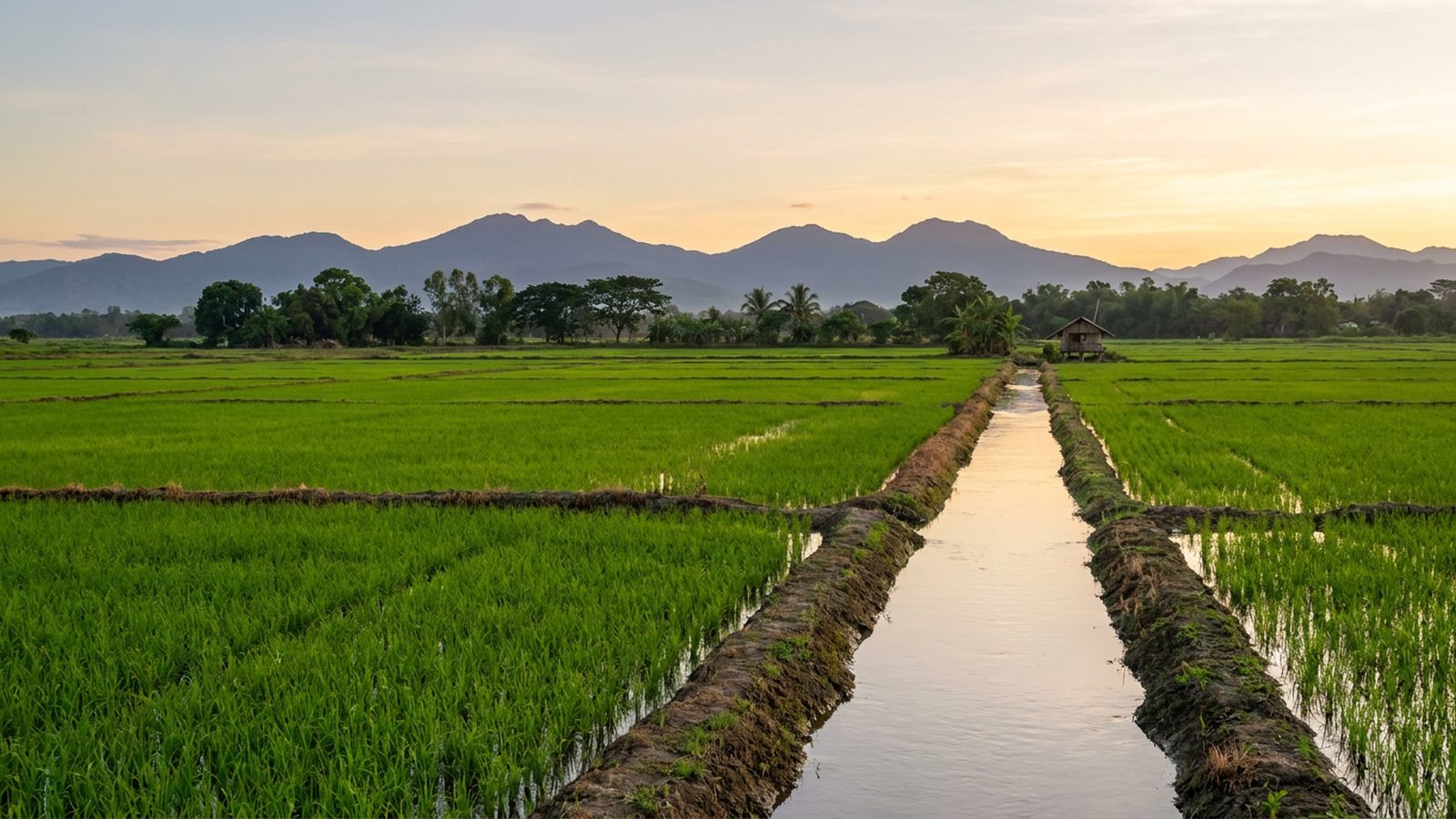
The agricultural land price per hectare in the Philippines runs from about ₱1 million (about $15,900 / €14,200) for a titled farm lot in Palawan to ₱25 million (about $398,000 / €356,000) for raw land on the edge of a Batangas town, in the lots listed on BalayHub this October. That spread is the first thing to understand: a hectare is 10,000 square meters, so a price of ₱180 (about $2.9 / €2.6) per square meter in a Nueva Ecija rice field is ₱1.8 million (about $28,700 / €25,600) per hectare, and the same hectare two hours from Metro Manila costs ten times more. The second thing to understand is that agricultural land is sold under a law of its own. The Comprehensive Agrarian Reform Law caps how much a buyer may hold, voids sales that breach it, and locks awarded land for ten years. This guide gives the prices from our sample and the rules that decide whether the sale can be registered at all.
What farm land lists for, per hectare
Our listing price sample holds 77 lots for sale, and eight of them are farm or raw land of a hectare or more, or priced the way farm land is. Per hectare, from the cheapest:
| Lot | Size | Asking price | Per hectare |
|---|---|---|---|
| Titled farm lot, Aborlan, Palawan | 2.5 ha | ₱2,545,200 (about $40,500 / €36,200) | ₱1,020,000 (about $16,200 / €14,500) |
| Rice farmland, Talugtug, Nueva Ecija | 2 ha | ₱3,600,000 (about $57,400 / €51,300) | ₱1,800,000 (about $28,700 / €25,600) |
| Irrigated farm lot, Guimba, Nueva Ecija | 1 ha | ₱3,500,000 (about $55,800 / €49,800) | ₱3,500,000 (about $55,800 / €49,800) |
| Farm with house and poultry, Bacolod | 3 ha | ₱15,000,000 (about $239,000 / €214,000) | ₱5,000,000 (about $79,700 / €71,200) |
| Farm lot with piggery, Catmon, Cebu | 4,560 sqm | ₱2,500,000 (about $39,800 / €35,600) | ₱5,480,000 (about $87,300 / €78,000) |
| Subdivided farm lots, Tanay, Rizal | 4 ha | ₱32,000,000 (about $510,000 / €456,000) | ₱8,000,000 (about $127,000 / €114,000) |
| Farm lot with fruit trees, Nasugbu, Batangas | 1.82 ha | ₱32,760,000 (about $522,000 / €467,000) | ₱18,000,000 (about $287,000 / €256,000) |
| Raw land, Tanauan, Batangas | 8,917 sqm | ₱22,000,000 (about $350,000 / €313,000) | ₱24,670,000 (about $393,000 / €351,000) |
The pattern is distance and water. Rice land in Nueva Ecija, the country's rice bowl, asks ₱1.8 million to ₱3.5 million (about $28,700 to $55,800 / €25,600 to €49,800) per hectare, with the irrigated lot at the top. Palawan farm land is the cheapest in the sample, and it is also the farthest from a large market. Land within two hours of Metro Manila is priced for what it may become rather than what it grows, which is why Tanay sits at ₱8 million (about $127,000 / €114,000) per hectare and Nasugbu and Tanauan at ₱18 million to ₱25 million (about $287,000 to $398,000 / €256,000 to €356,000). Our land price guide has the province by province medians, and the price per square meter tool updates as lots are added.
These are asking prices on a small sample, not appraisals. Farm land negotiates hard, and a lot that has sat for a year often closes well below the figure above.
The five hectare ceiling
Republic Act 6657, the Comprehensive Agrarian Reform Law, sets the ceiling. Section 6 lets a landowner retain no more than five hectares of agricultural land, and Section 70 applies the same limit to buyers: a sale of agricultural land is valid only if the buyer's total holdings, including the land being bought, stay within the ceiling, and sales that contravene the Act "shall be null and void."
The ceiling is enforced at the Registry of Deeds. Under the Department of Agrarian Reform's Administrative Order 1 of 1989, the buyer files a sworn statement that he or she and the spouse hold no more than five hectares of agricultural land counting the lot being acquired, with a copy served on the Barangay Agrarian Reform Committee, and the Register of Deeds will not register the transfer without it. Someone who already owns four hectares cannot buy two more; the Registry would refuse the deed.
Practitioners add that most Registries now ask for a DAR clearance before registering a sale, donation or partition of land classified as agricultural on the title or tax declaration, whether or not anyone farms it. The application goes to the DAR municipal or provincial office with the deed, a certified copy of the title, the current tax declaration, the affidavits of landholdings of buyer and seller, and a barangay certification stating whether tenants or farmworkers are on the land. Build the clearance into the timeline before you pay the balance.
Awarded land, tenants and the other locks
Land distributed to farmer beneficiaries under agrarian reform carries a Certificate of Land Ownership Award or an Emancipation Patent, and Section 27 of the law bars its sale for ten years from the award except to heirs, to the government or the Land Bank, or to other qualified beneficiaries. Republic Act 11953 of 2023 condoned the beneficiaries' unpaid land amortizations and lifted the Land Bank's mortgage liens, and the condonation is annotated on each title, but the Act states that it does not remove the existing limits on transfer, ownership and agricultural use. A CLOA with a recent date is a lot you cannot buy, however willing the holder.
Tenanted land is the second lock. A tenant on the land you are buying keeps the tenancy, and under the agrarian laws holds rights of pre-emption and redemption that can unwind a sale made without proper notice. The barangay certification in the DAR clearance file exists to flush this out; ask for it before the deposit, not after.
Conversion is the third. Section 65 allows the DAR to authorize conversion of agricultural land to other uses only where the land is no longer economically feasible for agriculture or the area has urbanized, and for awarded land only after five years from the award, and the law lists converting land to dodge agrarian reform among the prohibited acts, punishable under Section 74 by one month to three years in prison, a fine of ₱1,000 to ₱15,000 (about $16 to $239 / €14 to €214), or both. A buyer who wants a subdivision, a resort or a warehouse on farm land should price in a conversion process that may not be granted, and should treat an agent's promise that the land "can easily be converted" as a reason to walk.
Foreign buyers face the ordinary rule: land, farm or otherwise, cannot be owned by a foreign individual, as our guide on foreign ownership explains.
Checks before you pay
Start with the paper, following our guide to buying land: a certified copy of the title, read for the CLOA or EP notation and for annotations, as set out in our guide on how to verify a land title. Many farm lots are held only under a tax declaration, which proves possession and not ownership; our comparison of tax declaration vs land title explains what that buys you and what it does not.
Then the classification. The tax declaration says whether the assessor treats the land as agricultural, residential or commercial, and that word decides the real property tax, the conversion question and whether the DAR is involved at all. Then access: an interior farm lot without a registered passage is worth less than the asking price suggests, for the reasons in our guide to the right of way. Then water, by asking the National Irrigation Administration office whether the lot is in an irrigated area, which raises the value and narrows the conversion options at the same time.
Finally the count. Add the lot to everything agricultural that you and your spouse already own anywhere in the country; if the sum passes five hectares, the sale cannot be registered in your name, and structuring it through relatives or a corporation is among the acts the law names as circumvention. Current land for sale across the provinces is listed by city.
This article is general information, not legal advice. Prices are asking figures from BalayHub's listing price sample as of October 2026; the agrarian rules summarized here have exceptions and later amendments, so confirm your case with the DAR provincial office and a lawyer before signing.
Dollar and euro figures are approximate conversions at ₱62.8 per US dollar and ₱70.2 per euro (ECB reference rates, 2026-10-13).
Frequently asked questions
How much is a hectare of agricultural land in the Philippines?
In the lots listed on BalayHub in October 2026, from about ₱1 million (about $15,900 / €14,200) per hectare for a titled farm lot in Aborlan, Palawan, to ₱1.8 million to ₱3.5 million (about $28,700 to $55,800 / €25,600 to €49,800) for rice land in Nueva Ecija, ₱5 million to ₱8 million (about $79,700 to $127,000 / €71,200 to €114,000) for farms in Bacolod, Cebu and Rizal, and ₱18 million to ₱25 million (about $287,000 to $398,000 / €256,000 to €356,000) for farm or raw land in Batangas within two hours of Metro Manila. A hectare is 10,000 square meters, so ₱180 (about $2.9 / €2.6) per square meter is ₱1.8 million (about $28,700 / €25,600) per hectare.
Can I buy more than 5 hectares of agricultural land?
No. The Comprehensive Agrarian Reform Law caps a landowner's agricultural holdings at five hectares, and a sale is valid only if the buyer's total holdings, including the land being bought, stay within that ceiling. The buyer files a sworn statement of total landholdings with the Register of Deeds, which will not register the transfer without it, and a sale in breach of the ceiling is null and void.
Do I need a DAR clearance to buy agricultural land?
In practice, yes. Registries of Deeds ask for a DAR clearance before registering a sale, donation or partition of land classified as agricultural on the title or tax declaration, even if nobody farms it. The application goes to the DAR municipal or provincial office with the deed, a certified copy of the title, the tax declaration, affidavits of landholdings from buyer and seller, and a barangay certification on whether tenants are on the land.
Can land awarded under agrarian reform, with a CLOA, be sold?
Not for ten years from the award, except to heirs, to the government or the Land Bank, or to other qualified beneficiaries, under Section 27 of the agrarian reform law. The 2023 law that condoned beneficiaries' land amortizations lifted the Land Bank's mortgage liens but states that it does not remove the existing limits on transfer, ownership and agricultural use. A recent CLOA is a lot you cannot buy.
Can agricultural land be converted to residential or commercial use?
Only with DAR approval, and the law allows conversion only where the land is no longer economically feasible for agriculture or the area has urbanized, and for awarded land only after five years from the award. Converting agricultural land to evade agrarian reform is a prohibited act punishable by one month to three years in prison, a fine of ₱1,000 to ₱15,000 (about $16 to $239 / €14 to €214), or both. Price in a conversion that may be refused, and distrust any promise that it is easy.
Ang presyo ng agricultural land kada hectare sa Pilipinas ay umaabot mula humigit-kumulang ₱1 million (mga $15,900 / €14,200) para sa titled farm lot sa Palawan hanggang ₱25 million (mga $398,000 / €356,000) para sa raw land sa gilid ng isang bayan sa Batangas, sa mga loteng naka-list sa BalayHub ngayong Oktubre. Ang spread na iyon ang unang dapat maintindihan: ang isang hectare ay 10,000 square meters, kaya ang presyong ₱180 (mga $2.9 / €2.6) kada square meter sa isang palayan sa Nueva Ecija ay ₱1.8 million (mga $28,700 / €25,600) kada hectare, at ang parehong hectare na dalawang oras mula sa Metro Manila ay sampung beses na mas mahal. Ang ikalawang dapat maintindihan ay ibinebenta ang agricultural land sa ilalim ng sarili nitong batas. Nililimitahan ng Comprehensive Agrarian Reform Law kung gaano karami ang puwedeng hawakan ng buyer, pinapawalang-bisa nito ang mga bentang lumalabag doon, at nila-lock nito ang awarded land sa loob ng sampung taon. Ibinibigay ng gabay na ito ang mga presyo mula sa aming sample at ang mga patakarang nagpapasya kung maire-rehistro ba talaga ang bentahan.
Magkano ang listing ng farm land, kada hectare
May 77 loteng for sale ang aming listing price sample, at walo sa mga ito ay farm o raw land na isang hectare o higit pa, o naka-presyo sa paraan ng farm land. Kada hectare, mula sa pinakamura:
| Lote | Laki | Asking price | Kada hectare |
|---|---|---|---|
| Titled farm lot, Aborlan, Palawan | 2.5 ha | ₱2,545,200 (mga $40,500 / €36,200) | ₱1,020,000 (mga $16,200 / €14,500) |
| Palayan, Talugtug, Nueva Ecija | 2 ha | ₱3,600,000 (mga $57,400 / €51,300) | ₱1,800,000 (mga $28,700 / €25,600) |
| Irrigated farm lot, Guimba, Nueva Ecija | 1 ha | ₱3,500,000 (mga $55,800 / €49,800) | ₱3,500,000 (mga $55,800 / €49,800) |
| Farm na may bahay at poultry, Bacolod | 3 ha | ₱15,000,000 (mga $239,000 / €214,000) | ₱5,000,000 (mga $79,700 / €71,200) |
| Farm lot na may babuyan, Catmon, Cebu | 4,560 sqm | ₱2,500,000 (mga $39,800 / €35,600) | ₱5,480,000 (mga $87,300 / €78,000) |
| Subdivided farm lots, Tanay, Rizal | 4 ha | ₱32,000,000 (mga $510,000 / €456,000) | ₱8,000,000 (mga $127,000 / €114,000) |
| Farm lot na may mga puno ng prutas, Nasugbu, Batangas | 1.82 ha | ₱32,760,000 (mga $522,000 / €467,000) | ₱18,000,000 (mga $287,000 / €256,000) |
| Raw land, Tanauan, Batangas | 8,917 sqm | ₱22,000,000 (mga $350,000 / €313,000) | ₱24,670,000 (mga $393,000 / €351,000) |
Ang pattern ay distansya at tubig. Ang rice land sa Nueva Ecija, ang rice bowl ng bansa, ay nasa ₱1.8 million hanggang ₱3.5 million (mga $28,700 hanggang $55,800 / €25,600 hanggang €49,800) kada hectare, at nasa tuktok ang irrigated na lote. Ang farm land sa Palawan ang pinakamura sa sample, at ito rin ang pinakamalayo sa malaking merkado. Ang lupang nasa loob ng dalawang oras mula sa Metro Manila ay naka-presyo para sa kung ano ang puwede nitong maging at hindi para sa kung ano ang itinatanim dito, kaya nasa ₱8 million (mga $127,000 / €114,000) kada hectare ang Tanay at nasa ₱18 million hanggang ₱25 million (mga $287,000 hanggang $398,000 / €256,000 hanggang €356,000) ang Nasugbu at Tanauan. Nasa aming land price guide ang mga median kada probinsya, at nag-a-update ang price per square meter tool habang nadadagdag ang mga lote.
Mga asking price ito sa maliit na sample, hindi mga appraisal. Matinding tawaran ang farm land, at ang loteng isang taon nang nakatengga ay madalas magsara nang malayo sa ibaba ng figure sa itaas.
Ang limitasyong limang hectare
Ang Republic Act 6657, ang Comprehensive Agrarian Reform Law, ang nagtatakda ng limitasyon. Pinapayagan ng Section 6 ang landowner na mag-retain ng hindi hihigit sa limang hectare ng agricultural land, at inilalapat ng Section 70 ang parehong limit sa mga buyer: valid lang ang benta ng agricultural land kung ang kabuuang hawak ng buyer, kasama ang lupang binibili, ay nananatili sa loob ng limitasyon, at ang mga bentang lumalabag sa Act ay "shall be null and void."
Ipinapatupad ang limitasyon sa Registry of Deeds. Sa ilalim ng Administrative Order 1 of 1989 ng Department of Agrarian Reform, nagfa-file ang buyer ng sworn statement na siya at ang kanyang asawa ay may hawak na hindi hihigit sa limang hectare ng agricultural land kasama na ang loteng binibili, na may kopyang ipinapadala sa Barangay Agrarian Reform Committee, at hindi irerehistro ng Register of Deeds ang transfer kung wala ito. Ang taong may apat na hectare na ay hindi puwedeng bumili ng dalawa pa; tatanggihan ng Registry ang deed.
Dagdag ng mga practitioner na karamihan ng mga Registry ngayon ay humihingi ng DAR clearance bago irehistro ang benta, donasyon o partition ng lupang naka-classify bilang agricultural sa title o sa tax declaration, sinasaka man ito ng sinuman o hindi. Ipinapadala ang application sa DAR municipal o provincial office kasama ang deed, certified copy ng title, ang kasalukuyang tax declaration, ang mga affidavit of landholdings ng buyer at seller, at barangay certification na nagsasabi kung may mga tenant o farmworker sa lupa. Isama ang clearance sa timeline bago mo bayaran ang balance.
Awarded land, mga tenant at ang iba pang lock
Ang lupang ipinamahagi sa mga farmer beneficiary sa ilalim ng agrarian reform ay may Certificate of Land Ownership Award o Emancipation Patent, at ipinagbabawal ng Section 27 ng batas ang pagbebenta nito sa loob ng sampung taon mula sa award maliban sa mga tagapagmana, sa gobyerno o sa Land Bank, o sa iba pang qualified beneficiary. Kinondona ng Republic Act 11953 ng 2023 ang mga hindi nabayarang land amortization ng mga beneficiary at inalis nito ang mga mortgage lien ng Land Bank, at naka-annotate ang condonation sa bawat title, pero sinasabi ng Act na hindi nito inaalis ang mga umiiral na limitasyon sa transfer, pagmamay-ari at agricultural use. Ang CLOA na kamakailan lang ang petsa ay loteng hindi mo mabibili, gaano man kahandang magbenta ang may hawak.
Ang tenanted land ang ikalawang lock. Ang tenant sa lupang binibili mo ay nananatili sa tenancy, at sa ilalim ng mga batas sa agrarian reform ay may hawak siyang karapatan ng pre-emption at redemption na puwedeng magpawalang-bisa sa bentang ginawa nang walang wastong notice. Para dito umiiral ang barangay certification sa DAR clearance file; hingin ito bago ang deposit, hindi pagkatapos.
Ang conversion ang ikatlo. Pinapayagan ng Section 65 ang DAR na mag-authorize ng conversion ng agricultural land sa ibang gamit kung hindi na economically feasible ang lupa para sa agrikultura o kung naging urbanized na ang lugar, at para sa awarded land ay pagkalipas lang ng limang taon mula sa award, at isinasama ng batas ang pag-convert ng lupa para iwasan ang agrarian reform sa mga ipinagbabawal na gawain, na pinaparusahan sa ilalim ng Section 74 ng isang buwan hanggang tatlong taong pagkakakulong, multang ₱1,000 hanggang ₱15,000 (mga $16 hanggang $239 / €14 hanggang €214), o pareho. Ang buyer na gustong magtayo ng subdivision, resort o warehouse sa farm land ay dapat isama sa presyo ang conversion process na maaaring hindi ipagkaloob, at dapat ituring ang pangako ng agent na "madaling ma-convert" ang lupa bilang dahilan para umatras.
Nahaharap ang mga foreign buyer sa karaniwang patakaran: ang lupa, farm man o hindi, ay hindi puwedeng pag-aari ng isang foreign individual, gaya ng ipinapaliwanag ng aming gabay sa foreign ownership.
Mga check bago ka magbayad
Magsimula sa papeles, kasunod ang aming gabay sa pagbili ng lupa: certified copy ng title, na binabasa para sa CLOA o EP notation at para sa mga annotation, gaya ng nakalatag sa aming gabay sa kung paano i-verify ang land title. Maraming farm lot ang hawak lang sa ilalim ng tax declaration, na nagpapatunay ng possession at hindi ng pagmamay-ari; ipinapaliwanag ng aming paghahambing ng tax declaration vs land title kung ano ang nakukuha mo doon at kung ano ang hindi.
Pagkatapos, ang classification. Sinasabi ng tax declaration kung itinuturing ng assessor ang lupa bilang agricultural, residential o commercial, at ang salitang iyon ang nagpapasya sa real property tax, sa tanong ng conversion at kung sangkot ba talaga ang DAR. Pagkatapos, ang access: ang interior farm lot na walang registered na daanan ay mas mababa ang halaga kaysa sa ipinapahiwatig ng asking price, dahil sa mga dahilang nasa aming gabay sa right of way. Pagkatapos, ang tubig, sa pamamagitan ng pagtatanong sa opisina ng National Irrigation Administration kung nasa irrigated area ang lote, na nagpapataas ng halaga at sabay na nagpapakipot sa mga opsyon sa conversion.
Sa huli, ang bilang. Idagdag ang lote sa lahat ng agricultural na pag-aari mo at ng iyong asawa kahit saan sa bansa; kung lumampas sa limang hectare ang kabuuan, hindi maire-rehistro ang benta sa pangalan mo, at ang pag-structure nito sa pamamagitan ng mga kamag-anak o korporasyon ay kabilang sa mga gawaing tinatawag ng batas na circumvention. Ang kasalukuyang land for sale sa mga probinsya ay naka-list ayon sa lungsod.
Ang artikulong ito ay pangkalahatang impormasyon, hindi legal advice. Ang mga presyo ay asking figure mula sa listing price sample ng BalayHub noong Oktubre 2026; may mga exception at mas bagong amendment ang mga agrarian rule na binuod dito, kaya kumpirmahin ang iyong kaso sa DAR provincial office at sa abogado bago pumirma.
Tinatayang conversion lang ang mga halaga sa dollar at euro, sa ₱62.8 kada US dollar at ₱70.2 kada euro (ECB reference rates, 2026-10-13).
Mga madalas itanong
Magkano ang isang hectare ng agricultural land sa Pilipinas?
Sa mga loteng naka-list sa BalayHub noong Oktubre 2026, mula humigit-kumulang ₱1 million (mga $15,900 / €14,200) kada hectare para sa titled farm lot sa Aborlan, Palawan, ₱1.8 million hanggang ₱3.5 million (mga $28,700 hanggang $55,800 / €25,600 hanggang €49,800) para sa rice land sa Nueva Ecija, ₱5 million hanggang ₱8 million (mga $79,700 hanggang $127,000 / €71,200 hanggang €114,000) para sa mga farm sa Bacolod, Cebu at Rizal, at ₱18 million hanggang ₱25 million (mga $287,000 hanggang $398,000 / €256,000 hanggang €356,000) para sa farm o raw land sa Batangas na nasa loob ng dalawang oras mula sa Metro Manila. Ang isang hectare ay 10,000 square meters, kaya ang ₱180 (mga $2.9 / €2.6) kada square meter ay ₱1.8 million (mga $28,700 / €25,600) kada hectare.
Puwede ba akong bumili ng higit sa 5 hectares ng agricultural land?
Hindi. Nililimitahan ng Comprehensive Agrarian Reform Law ang agricultural holdings ng isang landowner sa limang hectare, at valid lang ang benta kung ang kabuuang hawak ng buyer, kasama ang lupang binibili, ay nananatili sa loob ng limitasyong iyon. Nagfa-file ang buyer ng sworn statement ng kabuuang landholdings sa Register of Deeds, na hindi irerehistro ang transfer kung wala ito, at ang bentang lumalabag sa limitasyon ay null and void.
Kailangan ko ba ng DAR clearance para bumili ng agricultural land?
Sa praktika, oo. Humihingi ang mga Registry of Deeds ng DAR clearance bago irehistro ang benta, donasyon o partition ng lupang naka-classify bilang agricultural sa title o sa tax declaration, kahit walang nagsasaka dito. Ipinapadala ang application sa DAR municipal o provincial office kasama ang deed, certified copy ng title, ang tax declaration, mga affidavit of landholdings mula sa buyer at seller, at barangay certification kung may mga tenant sa lupa.
Puwede bang ibenta ang lupang na-award sa ilalim ng agrarian reform, na may CLOA?
Hindi sa loob ng sampung taon mula sa award, maliban sa mga tagapagmana, sa gobyerno o sa Land Bank, o sa iba pang qualified beneficiary, sa ilalim ng Section 27 ng agrarian reform law. Ang batas ng 2023 na nagkondona sa mga land amortization ng mga beneficiary ay nag-alis ng mga mortgage lien ng Land Bank pero sinasabi nitong hindi nito inaalis ang mga umiiral na limitasyon sa transfer, pagmamay-ari at agricultural use. Ang kamakailang CLOA ay loteng hindi mo mabibili.
Puwede bang i-convert ang agricultural land sa residential o commercial use?
Sa pag-apruba lang ng DAR, at pinapayagan lang ng batas ang conversion kung hindi na economically feasible ang lupa para sa agrikultura o kung naging urbanized na ang lugar, at para sa awarded land ay pagkalipas lang ng limang taon mula sa award. Ang pag-convert ng agricultural land para iwasan ang agrarian reform ay ipinagbabawal na gawain na pinaparusahan ng isang buwan hanggang tatlong taong pagkakakulong, multang ₱1,000 hanggang ₱15,000 (mga $16 hanggang $239 / €14 hanggang €214), o pareho. Isama sa presyo ang conversion na maaaring tanggihan, at huwag magtiwala sa anumang pangakong madali ito.
Ang presyo sa agricultural land kada hectare sa Pilipinas nagsugod sa mga ₱1 million (mga $15,900 / €14,200) para sa titled nga farm lot sa Palawan hangtod ₱25 million (mga $398,000 / €356,000) para sa raw land sa daplin sa usa ka lungsod sa Batangas, sa mga lote nga gilista sa BalayHub karong Oktubre. Kanang kalapad sa presyo mao ang unang butang nga angay sabton: ang usa ka hectare 10,000 square meters, mao nga ang presyo nga ₱180 (mga $2.9 / €2.6) kada square meter sa usa ka basakan sa Nueva Ecija ₱1.8 million (mga $28,700 / €25,600) kada hectare, ug ang samang hectare nga duha ka oras gikan sa Metro Manila mokabat og napulo ka pilo. Ang ikaduhang butang nga angay sabton mao nga ang agricultural land gibaligya ubos sa kaugalingon niining balaod. Ang Comprehensive Agrarian Reform Law naglimite kung pila ang mahimong hupotan sa buyer, nagpawalay-bili sa mga baligya nga molapas niini, ug nag-lock sa awarded nga yuta sulod sa napulo ka tuig. Kini nga giya naghatag sa mga presyo gikan sa among sample ug sa mga lagda nga modesisyon kung marehistro ba gyud ang baligya.
Pila ang gilista nga presyo sa farm land, kada hectare
Ang among listing price sample adunay 77 ka lote nga gibaligya, ug walo niini farm o raw land nga usa ka hectare o labaw pa, o gipresyohan sama sa farm land. Kada hectare, gikan sa pinakabarato:
| Lote | Gidak-on | Asking price | Kada hectare |
|---|---|---|---|
| Titled nga farm lot, Aborlan, Palawan | 2.5 ha | ₱2,545,200 (mga $40,500 / €36,200) | ₱1,020,000 (mga $16,200 / €14,500) |
| Rice farmland, Talugtug, Nueva Ecija | 2 ha | ₱3,600,000 (mga $57,400 / €51,300) | ₱1,800,000 (mga $28,700 / €25,600) |
| Irrigated nga farm lot, Guimba, Nueva Ecija | 1 ha | ₱3,500,000 (mga $55,800 / €49,800) | ₱3,500,000 (mga $55,800 / €49,800) |
| Farm nga adunay balay ug poultry, Bacolod | 3 ha | ₱15,000,000 (mga $239,000 / €214,000) | ₱5,000,000 (mga $79,700 / €71,200) |
| Farm lot nga adunay piggery, Catmon, Cebu | 4,560 sqm | ₱2,500,000 (mga $39,800 / €35,600) | ₱5,480,000 (mga $87,300 / €78,000) |
| Subdivided nga farm lots, Tanay, Rizal | 4 ha | ₱32,000,000 (mga $510,000 / €456,000) | ₱8,000,000 (mga $127,000 / €114,000) |
| Farm lot nga adunay mga kahoy nga prutas, Nasugbu, Batangas | 1.82 ha | ₱32,760,000 (mga $522,000 / €467,000) | ₱18,000,000 (mga $287,000 / €256,000) |
| Raw land, Tanauan, Batangas | 8,917 sqm | ₱22,000,000 (mga $350,000 / €313,000) | ₱24,670,000 (mga $393,000 / €351,000) |
Ang pattern mao ang distansya ug tubig. Ang basakan sa Nueva Ecija, ang rice bowl sa nasod, adunay asking price nga ₱1.8 million hangtod ₱3.5 million (mga $28,700 hangtod $55,800 / €25,600 hangtod €49,800) kada hectare, ug ang irrigated nga lote maoy anaa sa pinakataas. Ang farm land sa Palawan mao ang pinakabarato sa sample, ug kini usab ang pinakalayo sa dako nga merkado. Ang yuta nga sulod sa duha ka oras gikan sa Metro Manila gipresyohan base sa kung unsa kini mahimong mahimo imbes sa kung unsa ang gitanom niini, mao nga ang Tanay anaa sa ₱8 million (mga $127,000 / €114,000) kada hectare ug ang Nasugbu ug Tanauan sa ₱18 million hangtod ₱25 million (mga $287,000 hangtod $398,000 / €256,000 hangtod €356,000). Ang among giya sa presyo sa yuta adunay mga median kada probinsya, ug ang price per square meter tool ma-update samtang madugang ang mga lote.
Mga asking price kini sa gamay nga sample, dili mga appraisal. Dako ang negosasyon sa farm land, ug ang lote nga usa na ka tuig nga wala mahalin kasagarang ma-close sa presyo nga mas ubos pa gyud sa numero sa ibabaw.
Ang limite nga lima ka hectare
Ang Republic Act 6657, ang Comprehensive Agrarian Reform Law, mao ang nagtakda sa limite. Ang Section 6 nagtugot sa landowner nga mag-retain og dili molapas sa lima ka hectare sa agricultural land, ug ang Section 70 nagpadapat sa samang limite sa mga buyer: ang baligya sa agricultural land balido lang kung ang total nga landholdings sa buyer, lakip ang yuta nga gipalit, magpabilin sulod sa limite, ug ang mga baligya nga molapas sa Act "shall be null and void."
Ang limite gipatuman sa Registry of Deeds. Ubos sa Administrative Order 1 of 1989 sa Department of Agrarian Reform, ang buyer mo-file og sworn statement nga siya ug ang iyang asawa o bana wala maghupot og labaw sa lima ka hectare sa agricultural land lakip ang lote nga gipalit, nga adunay kopya nga gihatag sa Barangay Agrarian Reform Committee, ug ang Register of Deeds dili morehistro sa transfer kung wala kini. Ang tawo nga adunay na upat ka hectare dili makapalit og duha pa; ibalibad sa Registry ang deed.
Gidugang sa mga practitioner nga kadaghanan sa mga Registry karon mangayo og DAR clearance sa dili pa morehistro sa baligya, donasyon o partition sa yuta nga giklasipikar isip agricultural sa title o sa tax declaration, mag-uma man o dili si bisan kinsa niini. Ang aplikasyon ipadala sa DAR municipal o provincial office uban ang deed, certified copy sa title, ang kasamtangang tax declaration, ang mga affidavit of landholdings sa buyer ug sa seller, ug barangay certification nga nag-ingon kung aduna bay mga tenant o farmworker sa yuta. Iapil ang clearance sa timeline sa dili ka pa mobayad sa balance.
Awarded nga yuta, mga tenant ug ang ubang mga restriksyon
Ang yuta nga giapod-apod sa mga farmer beneficiary ubos sa agrarian reform adunay Certificate of Land Ownership Award o Emancipation Patent, ug ang Section 27 sa balaod nagdili sa pagbaligya niini sulod sa napulo ka tuig gikan sa award gawas sa mga heredero, sa gobyerno o sa Land Bank, o sa ubang qualified beneficiaries. Ang Republic Act 11953 sa 2023 nag-condone sa wala mabayri nga land amortization sa mga beneficiary ug nagtangtang sa mortgage liens sa Land Bank, ug ang condonation gi-annotate sa matag title, pero ang Act nag-ingon nga wala niini tangtanga ang kasamtangang mga limitasyon sa transfer, ownership ug agricultural use. Ang CLOA nga bag-o pa ang petsa usa ka lote nga dili nimo mapalit, bisan unsa pa ka andam ang naghupot niini.
Ang yuta nga adunay tenant mao ang ikaduhang restriksyon. Ang tenant sa yuta nga imong gipalit magpabilin sa iyang tenancy, ug ubos sa mga balaod sa agrarian reform adunay katungod sa pre-emption ug redemption nga makabawi sa baligya nga gihimo nga walay hustong notice. Ang barangay certification sa DAR clearance file naglungtad aron mapagawas kini; pangayoa kini sa dili pa ang deposit, dili human niini.
Ang conversion mao ang ikatulo. Ang Section 65 nagtugot sa DAR nga mo-authorize sa conversion sa agricultural land ngadto sa ubang gamit lamang kung ang yuta dili na economically feasible para sa agrikultura o ang lugar na-urbanize na, ug para sa awarded nga yuta lamang human sa lima ka tuig gikan sa award, ug ang balaod naglista sa pag-convert sa yuta aron malikayan ang agrarian reform isip usa sa mga gidili nga buhat, nga silotan ubos sa Section 74 og usa ka bulan hangtod tulo ka tuig nga pagkabilanggo, multa nga ₱1,000 hangtod ₱15,000 (mga $16 hangtod $239 / €14 hangtod €214), o pareho. Ang buyer nga gusto og subdivision, resort o warehouse sa farm land angay mag-apil sa iyang kalkulasyon sa proseso sa conversion nga posibleng dili i-grant, ug angay isipon ang saad sa agent nga ang yuta "sayon ra ma-convert" isip rason aron mobiya.
Ang mga langyaw nga buyer mag-atubang sa naandang lagda: ang yuta, farm man o dili, dili mapanag-iya sa usa ka langyaw nga indibidwal, sama sa gipasabot sa among giya bahin sa foreign ownership.
Mga pagsusi sa dili ka pa mobayad
Sugdi sa mga papeles, sunod sa among giya sa pagpalit og yuta: certified copy sa title, nga basahon para sa CLOA o EP notation ug sa mga annotation, sama sa gilatid sa among giya bahin sa unsaon pag-verify sa land title. Daghang farm lot gihuptan lang ubos sa tax declaration, nga nagpamatuod sa possession ug dili sa ownership; ang among pagtandi sa tax declaration vs land title nagpasabot kung unsay makuha nimo niana ug kung unsay dili.
Dayon ang klasipikasyon. Ang tax declaration nag-ingon kung giisip ba sa assessor ang yuta isip agricultural, residential o commercial, ug kanang pulong maoy modesisyon sa real property tax, sa pangutana sa conversion ug kung maapil ba gyud ang DAR. Dayon ang agianan: ang interior nga farm lot nga walay rehistradong agianan mas ubos og bili kaysa gipakita sa asking price, tungod sa mga rason sa among giya sa right of way. Dayon ang tubig, pinaagi sa pagpangutana sa opisina sa National Irrigation Administration kung ang lote anaa ba sa irrigated nga lugar, nga nagpataas sa bili ug sa samang higayon nagpagamay sa mga opsyon sa conversion.
Sa kataposan ang ihap. Idugang ang lote sa tanang agricultural nga yuta nga imo na ug sa imong asawa o bana bisan asa sa nasod; kung ang total molapas sa lima ka hectare, ang baligya dili marehistro sa imong ngalan, ug ang pag-structure niini pinaagi sa mga paryente o korporasyon usa sa mga buhat nga gitawag sa balaod nga circumvention. Ang kasamtangang yuta nga gibaligya sa tibuok mga probinsya gilista kada siyudad.
Kini nga artikulo kinatibuk-ang impormasyon, dili legal advice. Ang mga presyo mga asking figure gikan sa listing price sample sa BalayHub sukad Oktubre 2026; ang mga lagda sa agrarian reform nga gi-summarize dinhi adunay mga eksepsyon ug mga ulahing amendment, mao nga kumpirmaha ang imong kaso sa DAR provincial office ug sa abogado sa dili ka pa mopirma.
Banabana lang ang mga conversion sa dollar ug euro, sa ₱62.8 matag US dollar ug ₱70.2 matag euro (ECB reference rates, 2026-10-13).
Mga kasagarang pangutana
Pila ang usa ka hectare sa agricultural land sa Pilipinas?
Sa mga lote nga gilista sa BalayHub sa Oktubre 2026, gikan sa mga ₱1 million (mga $15,900 / €14,200) kada hectare para sa titled nga farm lot sa Aborlan, Palawan, ngadto sa ₱1.8 million hangtod ₱3.5 million (mga $28,700 hangtod $55,800 / €25,600 hangtod €49,800) para sa basakan sa Nueva Ecija, ₱5 million hangtod ₱8 million (mga $79,700 hangtod $127,000 / €71,200 hangtod €114,000) para sa mga farm sa Bacolod, Cebu ug Rizal, ug ₱18 million hangtod ₱25 million (mga $287,000 hangtod $398,000 / €256,000 hangtod €356,000) para sa farm o raw land sa Batangas nga sulod sa duha ka oras gikan sa Metro Manila. Ang usa ka hectare 10,000 square meters, mao nga ang ₱180 (mga $2.9 / €2.6) kada square meter ₱1.8 million (mga $28,700 / €25,600) kada hectare.
Makapalit ba ko og labaw sa 5 hectares nga agricultural land?
Dili. Ang Comprehensive Agrarian Reform Law naglimite sa agricultural holdings sa landowner sa lima ka hectare, ug ang baligya balido lang kung ang total nga holdings sa buyer, lakip ang yuta nga gipalit, magpabilin sulod niana nga limite. Ang buyer mo-file og sworn statement sa total nga landholdings sa Register of Deeds, nga dili morehistro sa transfer kung wala kini, ug ang baligya nga molapas sa limite null and void.
Kinahanglan ba ko og DAR clearance aron makapalit og agricultural land?
Sa praktika, oo. Ang mga Registry of Deeds mangayo og DAR clearance sa dili pa morehistro sa baligya, donasyon o partition sa yuta nga giklasipikar isip agricultural sa title o sa tax declaration, bisan kung walay nag-uma niini. Ang aplikasyon ipadala sa DAR municipal o provincial office uban ang deed, certified copy sa title, ang tax declaration, mga affidavit of landholdings gikan sa buyer ug sa seller, ug barangay certification kung aduna bay mga tenant sa yuta.
Mabaligya ba ang yuta nga gi-award ubos sa agrarian reform, nga adunay CLOA?
Dili sulod sa napulo ka tuig gikan sa award, gawas sa mga heredero, sa gobyerno o sa Land Bank, o sa ubang qualified beneficiaries, ubos sa Section 27 sa balaod sa agrarian reform. Ang balaod sa 2023 nga nag-condone sa land amortization sa mga beneficiary nagtangtang sa mortgage liens sa Land Bank pero nag-ingon nga wala niini tangtanga ang kasamtangang mga limitasyon sa transfer, ownership ug agricultural use. Ang bag-o pa nga CLOA usa ka lote nga dili nimo mapalit.
Ma-convert ba ang agricultural land ngadto sa residential o commercial nga gamit?
Kung adunay DAR approval lamang, ug ang balaod nagtugot sa conversion lamang kung ang yuta dili na economically feasible para sa agrikultura o ang lugar na-urbanize na, ug para sa awarded nga yuta lamang human sa lima ka tuig gikan sa award. Ang pag-convert sa agricultural land aron malikayan ang agrarian reform usa ka gidili nga buhat nga silotan og usa ka bulan hangtod tulo ka tuig nga pagkabilanggo, multa nga ₱1,000 hangtod ₱15,000 (mga $16 hangtod $239 / €14 hangtod €214), o pareho. Iapil sa kalkulasyon ang conversion nga posibleng balibaran, ug ayaw pagsalig sa bisan unsang saad nga sayon ra kini.
Browse properties on BalayHub
See all listings →
Read next
How to Pay Amilyar Online: City Portals and Deadlines (2026)
How to pay amilyar online: what city portals ask for, Quezon City step by step, Cebu and Makati, discounts up to 20% and the 2% monthly penalty.
Capital Gains Tax on Property Sale Philippines: 6% Guide
Capital gains tax on property sale in the Philippines: 6% of price or zonal value, the 30 day deadline, and the principal residence exemption with escrow.
Missed Pag-IBIG Housing Loan Payments: Penalties, Options
Missed Pag-IBIG housing loan payments cost 1/20 of 1% a day and become a default at three months. Penalties, restructuring, foreclosure, selling options.