
Aug 21, 2026 · by BalayHub Admin · 6 min read
Apartment Building for Sale in the Philippines: Income Math
How to read an apartment building for sale: listings from ₱4.7M to ₱35M, gross to net yield on a nine room example, rental income tax and the title checks.
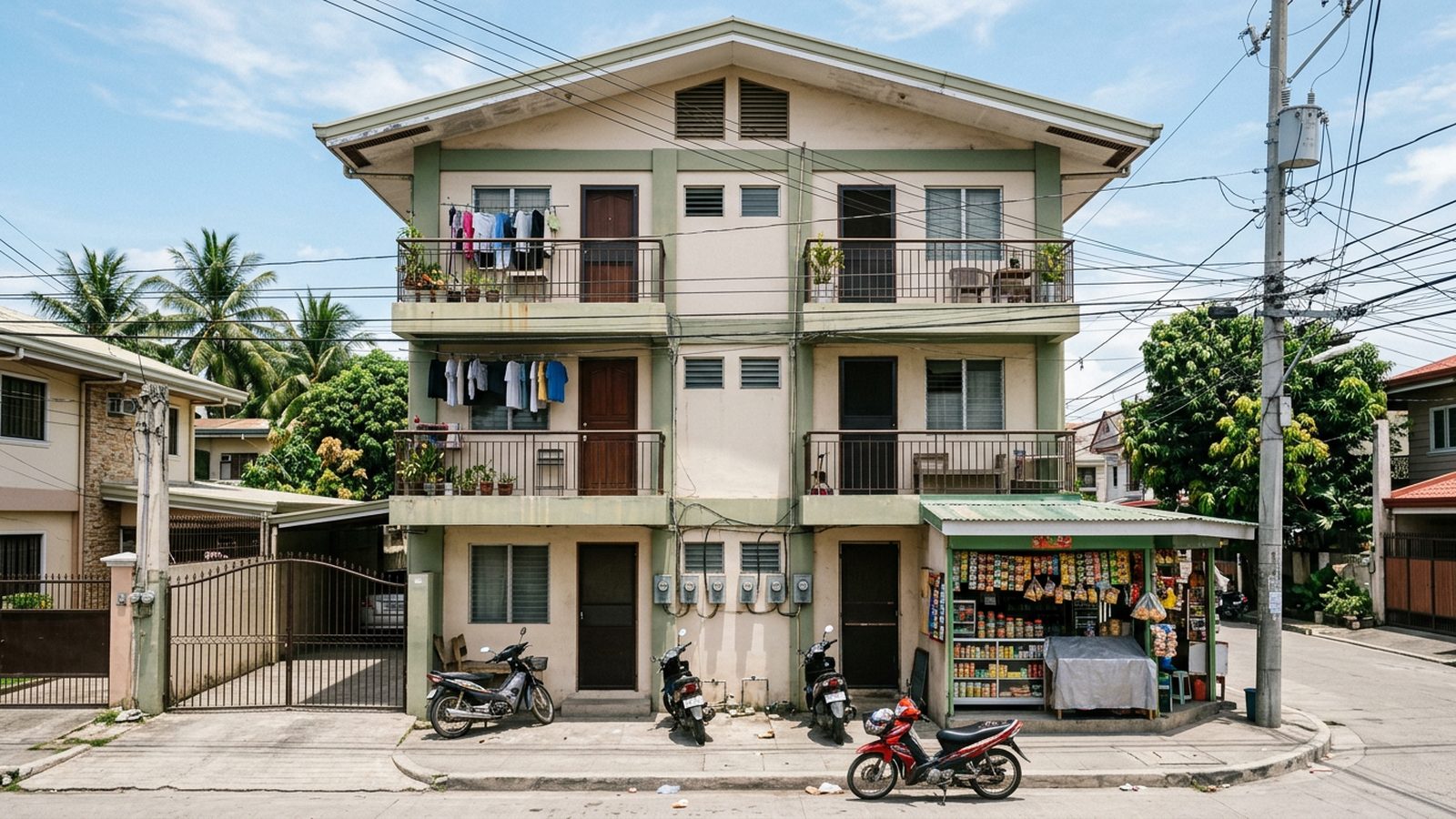
The listings call it an income generating apartment, a door apartment or a cash flowing compound, and the price never explains itself. An apartment building for sale in the Philippines is priced on what the units earn, not on the square meters, and most buyers work the math backwards from a number the seller chose. This guide sets out how to read one of these listings, how to turn the rent roll into a real yield after taxes and repairs, and what to check on the title before you pay for someone else's tenants.
What is actually on the market
Our listings show the range. A nine room income generating apartment in Pembo, Taguig, on a 184 square meter lot asks ₱35.1 million (about $562,000 / €483,000). A six unit compound in Gordon Heights, Olongapo, with 450 square meters of floor on a 1,050 square meter lot, asks ₱22 million (about $352,000 / €303,000), the same as an apartment complex in Dampas, Tagbilaran. A 15 unit building in Tayud, Consolacion, near Cebu asks ₱13 million (about $208,000 / €179,000), as does a nine room apartment in Pajo, Lapu-Lapu, and a three storey titled apartment with five bedrooms and a studio in Tondo, Manila. Below that sit a four bedroom corner lot apartment with a store in Mandurriao, Iloilo, at ₱9.5 million (about $152,000 / €131,000), a three door apartment in San Antonio, Parañaque, at ₱7 million (about $112,000 / €96,400), and a four unit apartment in Dau, Mabalacat, at ₱4.7 million (about $75,200 / €64,700).
Three things stand out. The price per unit runs from about ₱870,000 (about $13,900 / €12,000) in Consolacion to ₱3.9 million (about $62,400 / €53,700) in Taguig, a wider spread than any condo market. Almost every listing is a house and lot that has been subdivided into rooms or doors, not a purpose built block, which matters for permits. And the rent roll is rarely published, so you have to build it yourself.
The income math, on a real example
Take the nine room apartment in Pajo, Lapu-Lapu, at ₱13 million (about $208,000 / €179,000). Rooms in that part of Mactan rent for ₱6,000 to ₱9,000 (about $96 to $144 / €83 to €124) a month, so nine rooms at a realistic ₱8,000 (about $128 / €110) give ₱72,000 (about $1,150 / €992) a month or ₱864,000 (about $13,800 / €11,900) a year. Gross yield: 6.6 percent. That is the number the seller quotes, and it is not the number you keep.
Subtract a vacancy allowance of one month per room per year, about ₱72,000 (about $1,150 / €992). Subtract real property tax on land and improvement, which for a declared value of ₱3 million (about $48,000 / €41,300) in a city works out around ₱90,000 (about $1,440 / €1,240) a year at the 2 percent basic rate plus the 1 percent education fund; how amilyar is computed walks the assessment. Subtract repairs and repainting, which on nine rooms of shared plumbing and roofing run ₱60,000 to ₱100,000 (about $960 to $1,600 / €826 to €1,380) a year, and a caretaker or manager at 8 to 12 percent of rent if you do not collect yourself. Net operating income lands near ₱560,000 (about $8,960 / €7,710), a 4.3 percent yield before income tax and before any loan. That is in line with the roughly 4.2 percent gross yield Colliers reported for Metro Manila condominiums, and it beats the condo once you remember that the apartment owner has no association dues and owns the land.
The tax you will actually pay
Rental income is taxed twice: income tax on the earnings and a business tax on the gross receipts. Under the rules summarized by TaxCalculator.com.ph, a landlord with gross rent up to ₱3 million (about $48,000 / €41,300) a year can choose the graduated rates on net income after expenses, or an 8 percent flat rate on gross receipts above ₱250,000 (about $4,000 / €3,440). The business tax is 3 percent of gross rent below ₱3 million (about $48,000 / €41,300) and 12 percent VAT above it, but residential units renting for ₱15,000 (about $240 / €207) a month or less are exempt from both, which covers most room and door apartments. When the tenant is a business it withholds 5 percent of the rent and remits it to the BIR as a credit against your income tax. Expenses you can deduct on the graduated route include the real property tax, repairs, insurance, depreciation, loan interest and management fees, or you take a flat 40 percent optional standard deduction without receipts.
On the Lapu-Lapu example, nine rooms below ₱15,000 (about $240 / €207) mean no VAT and no percentage tax; on ₱864,000 (about $13,800 / €11,900) of gross rent the 8 percent option costs about ₱49,000 (about $784 / €675) a year, which takes the net yield to just under 4 percent. Run your own version on the property valuation tool to sanity check the purchase price against the district before you negotiate.
What to check before you buy the tenants
Start with the title. Most apartment listings are one lot and one title with several doors on it, so confirm at the Registry of Deeds that the seller owns the whole lot and that the improvement is declared at the assessor; verifying a land title is the same drill as for a house. Ask for the building permit and the occupancy permit, because a house converted into nine rooms without them can be ordered to reduce occupancy, and check the fire safety inspection certificate. Get every existing lease in writing with the deposit and advance the seller is holding, since those transfer to you, and a statement of who pays water and electricity; submetering is the difference between a clean rent roll and a monthly argument. Confirm the real property tax clearance is current, and write a deed that lists the leases you are assuming.
Then price it. Compare the price per unit with what a similar door rents for in the barangay, and compare the price per square meter of lot with raw land nearby, because the land is your exit if the building fails. Where rental income works best sets out the districts where room demand is deepest, and renting out property as a landlord covers the contracts and the eviction rules you inherit with the tenants. Browse the current apartments for sale with the 4 percent net figure in mind, and treat any listing that quotes only a gross yield as a listing that has not done its own math.
Figures are from BalayHub listings and the sources cited at the time of writing; tax rules change and depend on your registration. This is general information, not tax or investment advice.
Dollar and euro figures are approximate conversions at ₱62.5 per US dollar and ₱72.6 per euro (ECB reference rates, 2026-09-08).
Frequently asked questions
How much does an apartment building cost in the Philippines?
In our listings from ₱4.7 million (about $75,200 / €64,700) for a four unit apartment in Mabalacat and ₱7 million (about $112,000 / €96,400) for a three door in Parañaque to ₱13 million (about $208,000 / €179,000) for nine to fifteen unit buildings in Lapu-Lapu, Consolacion and Tondo, ₱22 million (about $352,000 / €303,000) for six unit compounds in Olongapo and Tagbilaran, and ₱35.1 million (about $562,000 / €483,000) for a nine room apartment in Pembo, Taguig. Per unit that is about ₱870,000 to ₱3.9 million (about $1.39e+04 million to $62,400 / €1.2e+04 million to €53,700), a wider spread than any condo market.
What is a realistic rental yield on an apartment building?
Gross yields of 6 to 8 percent are common on paper: a ₱13 million (about $208,000 / €179,000) nine room apartment at ₱8,000 (about $128 / €110) a room grosses ₱864,000 (about $13,800 / €11,900) a year, or 6.6 percent. After a one month vacancy allowance per room, real property tax, repairs and a manager's fee the net operating yield is near 4.3 percent, and about 4 percent after income tax, in line with the 4.2 percent Colliers reported for Metro Manila condos but without association dues.
How is rental income from an apartment taxed?
Income tax on the earnings, either graduated rates on net income after expenses or an 8 percent flat rate on gross receipts above ₱250,000 (about $4,000 / €3,440) if gross rent is at most ₱3 million (about $48,000 / €41,300) a year, plus a business tax of 3 percent below ₱3 million (about $48,000 / €41,300) or 12 percent VAT above it. Residential units renting for ₱15,000 (about $240 / €207) a month or less are exempt from the business tax, which covers most room and door apartments. Business tenants withhold 5 percent.
What documents should I check before buying an apartment building?
The title at the Registry of Deeds to confirm one owner for the whole lot, the tax declaration of the improvement, the building and occupancy permits for the number of units, the fire safety inspection certificate, every existing lease with the deposits the seller holds, the utility submetering setup, and a current real property tax clearance. Write the leases you assume into the deed of sale.
Is an apartment building better than a condo for rental income?
Often, on the numbers: no association dues, several tenants instead of one, and the land as an exit if the building fails, against a Metro Manila condo market with vacancy near 25 percent and yields around 4 percent. The price is management: multiple tenants, shared plumbing and roofing, permits and collections. It suits an owner who lives nearby or hires a caretaker, not an absentee investor.
Tinatawag ito ng mga listing na income generating apartment, door apartment o cash flowing compound, at hindi kailanman ipinapaliwanag ng presyo ang sarili nito. Ang apartment building for sale sa Pilipinas ay pinepresyuhan batay sa kinikita ng mga unit, hindi sa square meters, at karamihan ng buyer ay nagkukuwenta pabalik mula sa numerong pinili ng seller. Inilalatag ng guide na ito kung paano basahin ang ganitong listing, paano gawing tunay na yield ang rent roll pagkatapos ng buwis at repairs, at ano ang dapat suriin sa titulo bago ka magbayad para sa mga tenant ng ibang tao.
Ano talaga ang nasa market
Ipinapakita ng aming mga listing ang range. Ang isang nine room income generating apartment sa Pembo, Taguig, sa 184 square meter na lote ay may asking price na ₱35.1 million (mga $562,000 / €483,000). Ang isang six unit compound sa Gordon Heights, Olongapo, na may 450 square meters na floor area sa 1,050 square meter na lote, ay ₱22 million (mga $352,000 / €303,000), kapareho ng isang apartment complex sa Dampas, Tagbilaran. Ang isang 15 unit building sa Tayud, Consolacion, malapit sa Cebu ay ₱13 million (mga $208,000 / €179,000), gayundin ang isang nine room apartment sa Pajo, Lapu-Lapu, at isang three storey titled apartment na may five bedrooms at isang studio sa Tondo, Manila. Sa ibaba nito ay may four bedroom corner lot apartment na may tindahan sa Mandurriao, Iloilo, sa ₱9.5 million (mga $152,000 / €131,000), isang three door apartment sa San Antonio, Parañaque, sa ₱7 million (mga $112,000 / €96,400), at isang four unit apartment sa Dau, Mabalacat, sa ₱4.7 million (mga $75,200 / €64,700).
Tatlong bagay ang kapansin-pansin. Ang presyo bawat unit ay mula humigit-kumulang ₱870,000 (mga $13,900 / €12,000) sa Consolacion hanggang ₱3.9 million (mga $62,400 / €53,700) sa Taguig, mas malawak na spread kaysa sa anumang condo market. Halos bawat listing ay house and lot na hinati sa mga kuwarto o door, hindi purpose built na block, at mahalaga ito pagdating sa permits. At bihirang ilathala ang rent roll, kaya ikaw mismo ang kailangang bumuo nito.
Ang income math, sa isang totoong halimbawa
Kunin natin ang nine room apartment sa Pajo, Lapu-Lapu, sa ₱13 million (mga $208,000 / €179,000). Ang mga kuwarto sa bahaging iyon ng Mactan ay pinapaupahan sa ₱6,000 hanggang ₱9,000 (mga $96 hanggang $144 / €83 hanggang €124) kada buwan, kaya ang siyam na kuwarto sa makatotohanang ₱8,000 (mga $128 / €110) ay nagbibigay ng ₱72,000 (mga $1,150 / €992) kada buwan o ₱864,000 (mga $13,800 / €11,900) kada taon. Gross yield: 6.6 percent. Iyan ang numerong binabanggit ng seller, at hindi iyan ang numerong mananatili sa iyo.
Ibawas ang vacancy allowance na isang buwan bawat kuwarto bawat taon, humigit-kumulang ₱72,000 (mga $1,150 / €992). Ibawas ang real property tax sa lupa at improvement, na para sa declared value na ₱3 million (mga $48,000 / €41,300) sa isang lungsod ay umaabot sa humigit-kumulang ₱90,000 (mga $1,440 / €1,240) kada taon sa 2 percent basic rate at 1 percent education fund; tinatalakay ng paano kinukuwenta ang amilyar ang assessment. Ibawas ang repairs at repainting, na sa siyam na kuwartong may shared plumbing at bubong ay umaabot sa ₱60,000 hanggang ₱100,000 (mga $960 hanggang $1,600 / €826 hanggang €1,380) kada taon, at ang caretaker o manager sa 8 hanggang 12 percent ng renta kung hindi ikaw mismo ang mangongolekta. Ang net operating income ay lumalapag malapit sa ₱560,000 (mga $8,960 / €7,710), isang 4.3 percent yield bago ang income tax at bago ang anumang loan. Kapareho iyan ng humigit-kumulang 4.2 percent gross yield na iniulat ng Colliers para sa mga condominium sa Metro Manila, at nahihigitan nito ang condo kapag naalala mong walang association dues ang may-ari ng apartment at pag-aari niya ang lupa.
Ang buwis na talagang babayaran mo
Dalawang beses binubuwisan ang rental income: income tax sa kinita at business tax sa gross receipts. Sa ilalim ng mga patakarang binuod ng TaxCalculator.com.ph, ang landlord na may gross rent na hanggang ₱3 million (mga $48,000 / €41,300) kada taon ay maaaring pumili ng graduated rates sa net income pagkatapos ng expenses, o 8 percent flat rate sa gross receipts na lampas ₱250,000 (mga $4,000 / €3,440). Ang business tax ay 3 percent ng gross rent kung mas mababa sa ₱3 million (mga $48,000 / €41,300) at 12 percent VAT kung lampas dito, pero ang mga residential unit na pinapaupahan sa ₱15,000 (mga $240 / €207) kada buwan o mas mababa ay exempt sa pareho, na sumasaklaw sa karamihan ng room at door apartment. Kapag negosyo ang tenant, nagwi-withhold ito ng 5 percent ng renta at nireremit ito sa BIR bilang credit laban sa iyong income tax. Kabilang sa mga expenses na maaari mong ibawas sa graduated route ang real property tax, repairs, insurance, depreciation, loan interest at management fees, o kumuha ka ng flat 40 percent optional standard deduction nang walang resibo.
Sa halimbawa sa Lapu-Lapu, ang siyam na kuwartong mas mababa sa ₱15,000 (mga $240 / €207) ay nangangahulugang walang VAT at walang percentage tax; sa ₱864,000 (mga $13,800 / €11,900) na gross rent, ang 8 percent option ay nagkakahalaga ng humigit-kumulang ₱49,000 (mga $784 / €675) kada taon, na nagdadala sa net yield sa bahagya lang na mas mababa sa 4 percent. Patakbuhin ang sarili mong bersyon sa property valuation tool para masuri kung makatuwiran ang purchase price kumpara sa distrito bago ka makipagnegosasyon.
Ano ang dapat suriin bago mo bilhin ang mga tenant
Magsimula sa titulo. Karamihan ng apartment listing ay isang lote at isang titulo na may ilang door dito, kaya kumpirmahin sa Registry of Deeds na pag-aari ng seller ang buong lote at na naka-declare ang improvement sa assessor; ang pag-verify ng land title ay parehong proseso tulad ng sa bahay. Hingin ang building permit at ang occupancy permit, dahil ang bahay na ginawang siyam na kuwarto nang wala ang mga ito ay maaaring utusang bawasan ang occupancy, at suriin ang fire safety inspection certificate. Kunin nang nakasulat ang bawat umiiral na lease kasama ang deposit at advance na hawak ng seller, dahil lilipat ang mga ito sa iyo, at isang statement kung sino ang nagbabayad ng tubig at kuryente; ang submetering ang pagkakaiba ng malinis na rent roll at buwanang pagtatalo. Kumpirmahin na updated ang real property tax clearance, at isulat ang deed na naglilista ng mga lease na aakuin mo.
Pagkatapos ay presyuhan ito. Ikumpara ang presyo bawat unit sa renta ng katulad na door sa barangay, at ikumpara ang presyo per square meter ng lote sa raw land sa malapit, dahil ang lupa ang iyong exit kung pumalya ang building. Inilalatag ng saan pinakamainam ang rental income ang mga distritong pinakamalalim ang demand sa kuwarto, at sinasaklaw ng pagpapaupa ng property bilang landlord ang mga kontrata at eviction rules na mamanahin mo kasama ng mga tenant. Tingnan ang kasalukuyang apartments for sale nang nasa isip ang 4 percent net figure, at ituring ang anumang listing na gross yield lang ang binabanggit bilang listing na hindi pa nagkukuwenta ng sarili nitong math.
Ang mga figure ay mula sa BalayHub listings at sa mga source na binanggit sa oras ng pagsulat; nagbabago ang mga patakaran sa buwis at nakadepende ang mga ito sa iyong registration. Pangkalahatang impormasyon ito, hindi tax o investment advice.
Tinatayang conversion lang ang mga halaga sa dollar at euro, sa ₱62.5 kada US dollar at ₱72.6 kada euro (ECB reference rates, 2026-09-08).
Mga madalas itanong
Magkano ang apartment building sa Pilipinas?
Sa aming mga listing, mula ₱4.7 million (mga $75,200 / €64,700) para sa four unit apartment sa Mabalacat at ₱7 million (mga $112,000 / €96,400) para sa three door sa Parañaque hanggang ₱13 million (mga $208,000 / €179,000) para sa mga building na siyam hanggang labinlimang unit sa Lapu-Lapu, Consolacion at Tondo, ₱22 million (mga $352,000 / €303,000) para sa mga six unit compound sa Olongapo at Tagbilaran, at ₱35.1 million (mga $562,000 / €483,000) para sa nine room apartment sa Pembo, Taguig. Bawat unit, humigit-kumulang ₱870,000 hanggang ₱3.9 million (mga $1.39e+04 million hanggang $62,400 / €1.2e+04 million hanggang €53,700) iyan, mas malawak na spread kaysa sa anumang condo market.
Ano ang makatotohanang rental yield sa apartment building?
Karaniwan sa papel ang gross yield na 6 hanggang 8 percent: ang ₱13 million (mga $208,000 / €179,000) na nine room apartment sa ₱8,000 (mga $128 / €110) bawat kuwarto ay may gross na ₱864,000 (mga $13,800 / €11,900) kada taon, o 6.6 percent. Pagkatapos ng isang buwang vacancy allowance bawat kuwarto, real property tax, repairs at manager's fee, malapit sa 4.3 percent ang net operating yield, at humigit-kumulang 4 percent pagkatapos ng income tax, kapareho ng 4.2 percent na iniulat ng Colliers para sa mga condo sa Metro Manila pero walang association dues.
Paano binubuwisan ang rental income mula sa apartment?
Income tax sa kinita, graduated rates man sa net income pagkatapos ng expenses o 8 percent flat rate sa gross receipts na lampas ₱250,000 (mga $4,000 / €3,440) kung hindi hihigit sa ₱3 million (mga $48,000 / €41,300) kada taon ang gross rent, kasama ang business tax na 3 percent kung mas mababa sa ₱3 million (mga $48,000 / €41,300) o 12 percent VAT kung lampas dito. Ang mga residential unit na pinapaupahan sa ₱15,000 (mga $240 / €207) kada buwan o mas mababa ay exempt sa business tax, na sumasaklaw sa karamihan ng room at door apartment. Nagwi-withhold ng 5 percent ang mga business tenant.
Anong mga dokumento ang dapat kong suriin bago bumili ng apartment building?
Ang titulo sa Registry of Deeds para kumpirmahin na iisa ang may-ari ng buong lote, ang tax declaration ng improvement, ang building at occupancy permit para sa bilang ng unit, ang fire safety inspection certificate, bawat umiiral na lease kasama ang mga deposit na hawak ng seller, ang setup ng utility submetering, at updated na real property tax clearance. Isulat sa deed of sale ang mga lease na aakuin mo.
Mas maganda ba ang apartment building kaysa condo para sa rental income?
Madalas, sa mga numero: walang association dues, ilang tenant sa halip na isa, at ang lupa bilang exit kung pumalya ang building, kumpara sa condo market sa Metro Manila na may vacancy na malapit sa 25 percent at yield na humigit-kumulang 4 percent. Ang kapalit ay ang pamamahala: maraming tenant, shared plumbing at bubong, mga permit at koleksyon. Bagay ito sa may-aring nakatira sa malapit o kumukuha ng caretaker, hindi sa absentee investor.
Gitawag kini sa mga listing og income generating apartment, door apartment o cash flowing compound, ug ang presyo wala gyud mopasabot sa kaugalingon. Ang apartment building for sale sa Pilipinas gipresyohan base sa kita sa mga unit, dili sa square meters, ug kadaghanan sa mga buyer mag-compute pabalik gikan sa numero nga gipili sa seller. Kini nga guide nagpasabot kung unsaon pagbasa sa usa niini nga listing, unsaon pag-convert sa rent roll ngadto sa tinuod nga yield human sa buhis ug repair, ug unsa ang angay susihon sa titulo usa ka mobayad para sa mga tenant sa laing tawo.
Unsa gyud ang naa sa merkado
Makita sa among mga listing ang range. Ang nine room income generating apartment sa Pembo, Taguig, sa 184 square meter nga lote nagpangayo og ₱35.1 million (mga $562,000 / €483,000). Ang six unit compound sa Gordon Heights, Olongapo, nga naay 450 square meters nga floor area sa 1,050 square meter nga lote, nagpangayo og ₱22 million (mga $352,000 / €303,000), pareho sa usa ka apartment complex sa Dampas, Tagbilaran. Ang 15 unit building sa Tayud, Consolacion, duol sa Cebu nagpangayo og ₱13 million (mga $208,000 / €179,000), mao usab ang nine room apartment sa Pajo, Lapu-Lapu, ug ang three storey titled apartment nga naay lima ka bedroom ug usa ka studio sa Tondo, Manila. Ubos niini ang four bedroom corner lot apartment nga naay tindahan sa Mandurriao, Iloilo, sa ₱9.5 million (mga $152,000 / €131,000), ang three door apartment sa San Antonio, Parañaque, sa ₱7 million (mga $112,000 / €96,400), ug ang four unit apartment sa Dau, Mabalacat, sa ₱4.7 million (mga $75,200 / €64,700).
Tulo ka butang ang mogawas. Ang presyo matag unit gikan sa mga ₱870,000 (mga $13,900 / €12,000) sa Consolacion hangtod ₱3.9 million (mga $62,400 / €53,700) sa Taguig, mas lapad nga spread kaysa bisan unsang condo market. Halos tanang listing usa ka house and lot nga gibahin ngadto sa mga kwarto o door, dili purpose built nga building, ug importante kini para sa mga permit. Ug panagsa ra ma-publish ang rent roll, mao nga ikaw mismo ang mohimo niini.
Ang income math, sa tinuod nga pananglitan
Kuhaa ang nine room apartment sa Pajo, Lapu-Lapu, sa ₱13 million (mga $208,000 / €179,000). Ang mga kwarto sa maong bahin sa Mactan maabangan og ₱6,000 hangtod ₱9,000 (mga $96 hangtod $144 / €83 hangtod €124) kada bulan, mao nga ang siyam ka kwarto sa realistic nga ₱8,000 (mga $128 / €110) mohatag og ₱72,000 (mga $1,150 / €992) kada bulan o ₱864,000 (mga $13,800 / €11,900) kada tuig. Gross yield: 6.6 percent. Mao kana ang numero nga isulti sa seller, ug dili kana ang numero nga imong mahabilin.
Kuhai og vacancy allowance nga usa ka bulan matag kwarto kada tuig, mga ₱72,000 (mga $1,150 / €992). Kuhai og real property tax sa yuta ug improvement, nga para sa declared value nga ₱3 million (mga $48,000 / €41,300) sa usa ka siyudad mokabat og mga ₱90,000 (mga $1,440 / €1,240) kada tuig sa 2 percent nga basic rate dugang ang 1 percent nga education fund; ang unsaon pag-compute sa amilyar nagpasabot sa assessment. Kuhai og repair ug repainting, nga sa siyam ka kwarto nga naay shared plumbing ug atop mokabat og ₱60,000 hangtod ₱100,000 (mga $960 hangtod $1,600 / €826 hangtod €1,380) kada tuig, ug caretaker o manager nga 8 hangtod 12 percent sa abang kung dili ikaw mismo ang mokolekta. Ang net operating income moabot sa duol ₱560,000 (mga $8,960 / €7,710), nga 4.3 percent nga yield usa pa ang income tax ug usa pa ang bisan unsang loan. Duol kini sa mga 4.2 percent nga gross yield nga gi-report sa Colliers para sa mga condominium sa Metro Manila, ug molabaw kini sa condo kung hinumdoman nga ang tag-iya sa apartment walay association dues ug tag-iya sa yuta.
Ang buhis nga imo gyud nga bayran
Duha ka higayon buhisan ang rental income: income tax sa kita ug business tax sa gross receipts. Ubos sa mga lagda nga gi-summarize sa TaxCalculator.com.ph, ang landlord nga naay gross rent hangtod ₱3 million (mga $48,000 / €41,300) kada tuig makapili sa graduated rates sa net income human sa mga gasto, o sa 8 percent nga flat rate sa gross receipts nga labaw sa ₱250,000 (mga $4,000 / €3,440). Ang business tax 3 percent sa gross rent ubos sa ₱3 million (mga $48,000 / €41,300) ug 12 percent VAT kung labaw niini, apan ang residential units nga giabangan og ₱15,000 (mga $240 / €207) kada bulan o ubos pa exempted sa duha, ug sakop niini ang kadaghanan sa mga room ug door apartment. Kung negosyo ang tenant, mo-withhold kini og 5 percent sa abang ug i-remit sa BIR isip credit batok sa imong income tax. Ang mga gasto nga mahimo nimong i-deduct sa graduated route naglakip sa real property tax, repair, insurance, depreciation, interest sa loan ug management fees, o mokuha ka og flat 40 percent nga optional standard deduction nga walay resibo.
Sa pananglitan sa Lapu-Lapu, ang siyam ka kwarto nga ubos sa ₱15,000 (mga $240 / €207) nagpasabot nga walay VAT ug walay percentage tax; sa ₱864,000 (mga $13,800 / €11,900) nga gross rent, ang 8 percent nga option mokantidad og mga ₱49,000 (mga $784 / €675) kada tuig, nga mopaubos sa net yield sa ubos gamay sa 4 percent. Himoa ang imong kaugalingong bersyon sa property valuation tool aron ma-check ang purchase price batok sa distrito usa ka makig-negosasyon.
Unsa ang susihon usa ka mopalit sa mga tenant
Sugdi sa titulo. Kadaghanan sa mga apartment listing usa ka lote ug usa ka titulo nga naay pipila ka door, mao nga kumpirmaha sa Registry of Deeds nga ang seller mao ang tag-iya sa tibuok lote ug nga ang improvement gi-declare sa assessor; ang pag-verify sa land title pareho ra nga proseso sa balay. Pangayoa ang building permit ug ang occupancy permit, kay ang balay nga gihimong siyam ka kwarto nga wala niini mahimong mandoan nga pakunhoran ang occupancy, ug susiha ang fire safety inspection certificate. Kuhaa ang matag existing lease sa sinulat uban ang deposit ug advance nga gihuptan sa seller, kay ma-transfer kini kanimo, ug usa ka statement kung kinsa ang mobayad sa tubig ug kuryente; ang submetering mao ang kalainan tali sa limpyo nga rent roll ug binulan nga lalis. Kumpirmaha nga current ang real property tax clearance, ug pagsulat og deed nga naglista sa mga lease nga imong dad-on.
Dayon presyohi kini. Ikumpara ang presyo matag unit sa abang sa susamang door sa barangay, ug ikumpara ang presyo per square meter sa lote sa raw land sa duol, kay ang yuta mao ang imong exit kung mapakyas ang building. Ang Asa labing epektibo ang rental income naglista sa mga distrito diin labing lawom ang demand sa kwarto, ug ang pagpaabang sa property isip landlord nagsakop sa mga kontrata ug sa mga lagda sa eviction nga imong mapanunod uban sa mga tenant. Tan-awa ang kasamtangang apartments for sale nga naa sa hunahuna ang 4 percent nga net figure, ug isipa ang bisan unsang listing nga gross yield ra ang gihisgotan isip listing nga wala pa maghimo sa iyang kaugalingong math.
Ang mga numero gikan sa BalayHub listings ug sa mga source nga gi-cite sa panahon sa pagsulat; mausab ang mga lagda sa buhis ug nagdepende sa imong registration. Kinatibuk-ang impormasyon kini, dili tax o investment advice.
Banabana lang ang mga conversion sa dollar ug euro, sa ₱62.5 matag US dollar ug ₱72.6 matag euro (ECB reference rates, 2026-09-08).
Mga kasagarang pangutana
Pila ang presyo sa apartment building sa Pilipinas?
Sa among mga listing gikan sa ₱4.7 million (mga $75,200 / €64,700) para sa four unit apartment sa Mabalacat ug ₱7 million (mga $112,000 / €96,400) para sa three door sa Parañaque hangtod ₱13 million (mga $208,000 / €179,000) para sa mga building nga siyam hangtod napulo ug lima ka unit sa Lapu-Lapu, Consolacion ug Tondo, ₱22 million (mga $352,000 / €303,000) para sa mga six unit compound sa Olongapo ug Tagbilaran, ug ₱35.1 million (mga $562,000 / €483,000) para sa nine room apartment sa Pembo, Taguig. Matag unit mga ₱870,000 hangtod ₱3.9 million (mga $1.39e+04 million hangtod $62,400 / €1.2e+04 million hangtod €53,700) kini, mas lapad nga spread kaysa bisan unsang condo market.
Unsa ang realistic nga rental yield sa apartment building?
Kasagaran ang gross yield nga 6 hangtod 8 percent sa papel: ang ₱13 million (mga $208,000 / €179,000) nga nine room apartment sa ₱8,000 (mga $128 / €110) matag kwarto mo-gross og ₱864,000 (mga $13,800 / €11,900) kada tuig, o 6.6 percent. Human sa usa ka bulan nga vacancy allowance matag kwarto, real property tax, repair ug fee sa manager, ang net operating yield duol sa 4.3 percent, ug mga 4 percent human sa income tax, duol sa 4.2 percent nga gi-report sa Colliers para sa mga condo sa Metro Manila apan walay association dues.
Unsaon pagbuhis sa rental income gikan sa apartment?
Income tax sa kita, graduated rates sa net income human sa mga gasto o 8 percent nga flat rate sa gross receipts nga labaw sa ₱250,000 (mga $4,000 / €3,440) kung ang gross rent hangtod ₱3 million (mga $48,000 / €41,300) kada tuig, dugang ang business tax nga 3 percent ubos sa ₱3 million (mga $48,000 / €41,300) o 12 percent VAT kung labaw niini. Ang residential units nga giabangan og ₱15,000 (mga $240 / €207) kada bulan o ubos pa exempted sa business tax, ug sakop niini ang kadaghanan sa mga room ug door apartment. Ang mga business tenant mo-withhold og 5 percent.
Unsa nga mga dokumento ang angay nakong susihon usa mopalit og apartment building?
Ang titulo sa Registry of Deeds aron kumpirmahon nga usa ra ang tag-iya sa tibuok lote, ang tax declaration sa improvement, ang building ug occupancy permit para sa gidaghanon sa mga unit, ang fire safety inspection certificate, ang matag existing lease uban ang mga deposit nga gihuptan sa seller, ang setup sa utility submetering, ug ang current nga real property tax clearance. Isulat sa deed of sale ang mga lease nga imong dad-on.
Mas maayo ba ang apartment building kaysa condo para sa rental income?
Kasagaran, sa mga numero: walay association dues, pipila ka tenant imbes nga usa, ug ang yuta isip exit kung mapakyas ang building, batok sa condo market sa Metro Manila nga naay vacancy nga duol sa 25 percent ug yield nga mga 4 percent. Ang bayad mao ang management: daghang tenant, shared plumbing ug atop, mga permit ug koleksyon. Angay kini sa tag-iya nga nagpuyo sa duol o mag-hire og caretaker, dili sa absentee investor.
Looking for a place?
See all listings →Read next
Rent or Buy in Metro Manila 2026: The Break-even Math
Rent or buy in Metro Manila: a one bedroom rents for ₱25,000 and sells for ₱7.7M. The monthly cost of owning, the break even growth rate and the horizon.
Land Title Annotations Philippines: What Each Entry Means
Land title annotations Philippines buyers must read: mortgage, lis pendens, adverse claim, levy, easement and the Rule 74 entry, and how to clear each one.
RFO Condo vs Pre-Selling in the Philippines: Which to Buy
RFO condo vs pre-selling: cash needed now or stretched over 24 to 48 months, construction risk, rent from month one, and the finished buildings by city.